Shrines on the valley rim · Changunarayan
Changu Narayan and the Licchavi stones
On a ridge above Bhaktapur, a two-roofed temple to Vishnu keeps the oldest dated inscription in Nepal and a courtyard of stone carvings from the valley's first great dynasty.
- Era
- Licchavi
- From Thamel
- Taxi via Bhaktapur, or bus and walk
- Bring
- Walking shoes, water and time for the courtyard
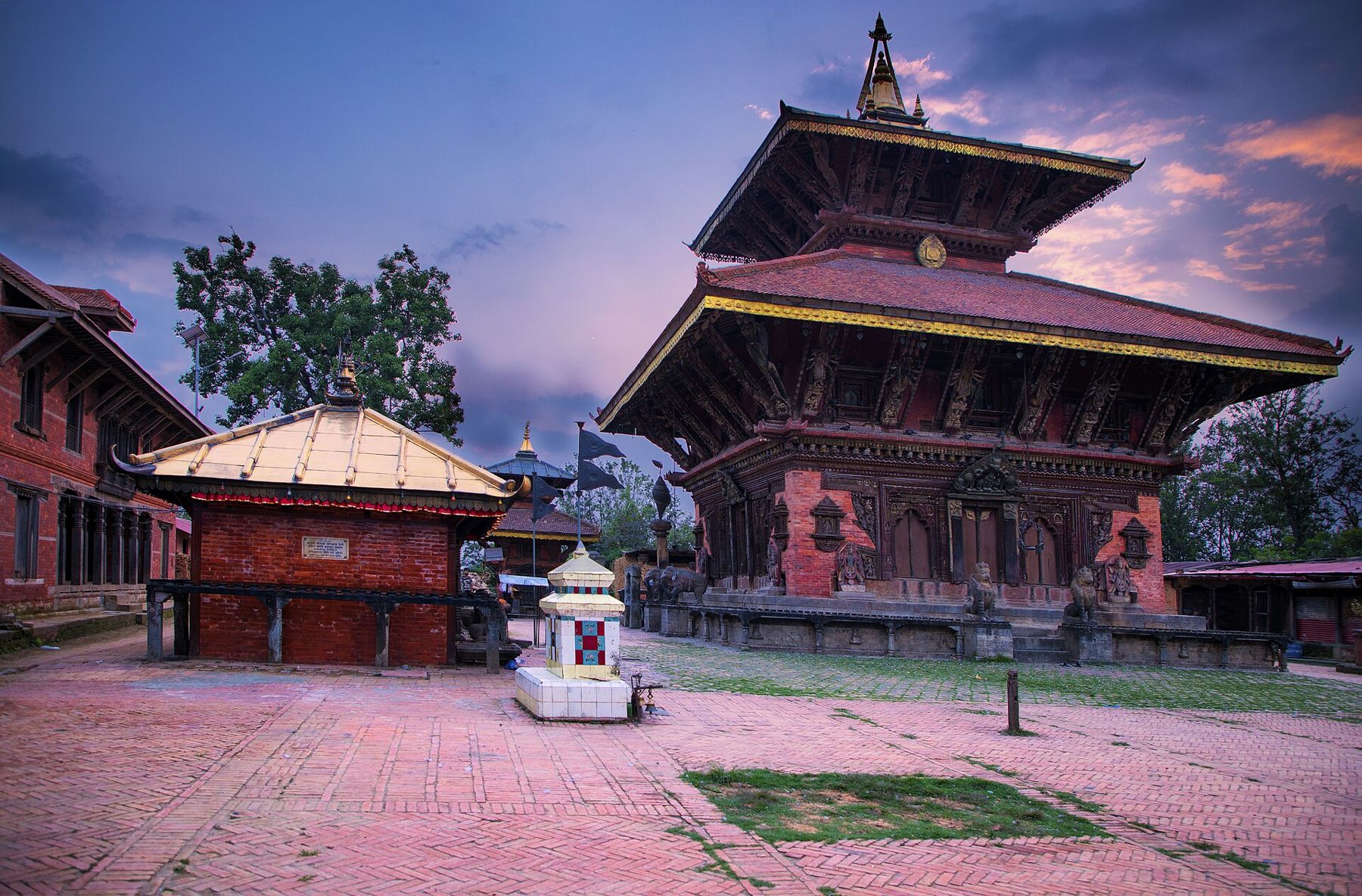
Changu Narayan sits at the end of a ridge on the north-eastern edge of the Kathmandu Valley, above the Manohara river and a few kilometres north of Bhaktapur. A small village of brick houses climbs the slope to a temple courtyard, and in the middle of the courtyard stands a two-roofed temple to Vishnu in his form as Narayan.
It is not the largest temple in the valley, nor the busiest. But it is the oldest temple site still in worship there, and its courtyard holds stone carvings and inscriptions from the Licchavi period, the dynasty that ruled the valley from roughly the fourth century to the ninth. For anyone interested in how the valley's history begins, this is the place.
The inscription of Manadeva
The most important object at Changu Narayan is a stone pillar near the temple's western side. It carries an inscription set up by King Manadeva in 464 CE, counted as the oldest dated inscription in Nepal. Written in Sanskrit, it records the king's deeds, including military campaigns, and his devotion to his mother after the death of his father.
Manadeva is the first king of the valley whose reign can be fixed with confidence, and his inscriptions, of which this is the earliest, are the starting point for the history of the Licchavi kingdom. The language and the script link the valley to the wider world of Sanskrit learning in northern India at the time.
The pillar is easy to pass by. It looks like an old stone shaft with worn lettering, and you need to get close to see the lines of script. Standing in front of it, you are looking at the first securely dated words of Nepal's written history.
Nearby kneels a stone Garuda, Vishnu's bird-mount, with hands folded in devotion, facing the temple door. It is among the finest early sculptures in the valley.
The Licchavi carvings
Around the temple, the courtyard is filled with sculpture from the Licchavi period and later. Several images show Vishnu in his different forms and deeds. One shows Vishnu as Trivikrama, the god who covered the universe in three strides. Another shows Narasimha, the man-lion who destroyed a demon king. A panel shows Vishnu in his cosmic form, with many heads and arms, and another shows him riding on Garuda.
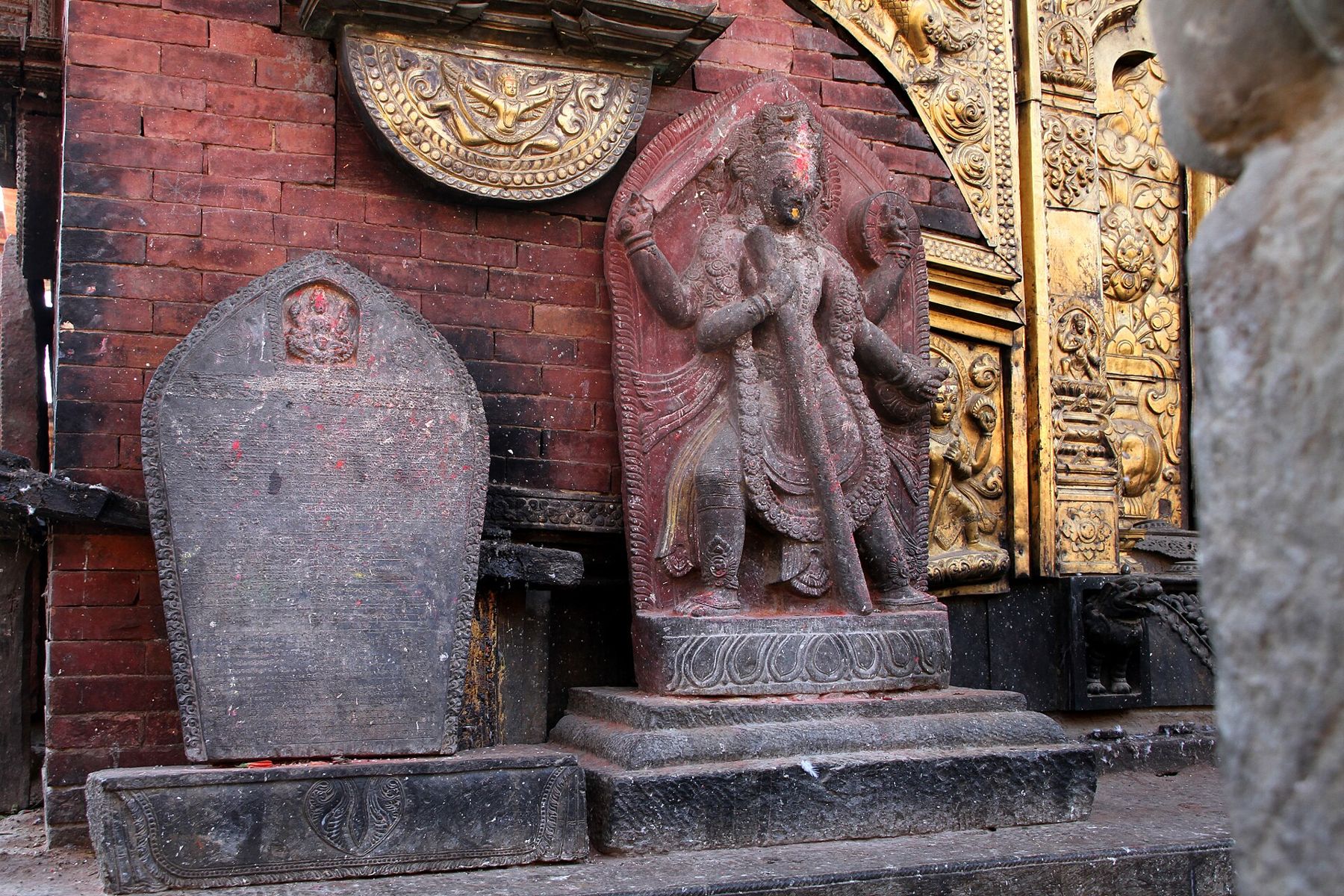
These stones are not museum pieces. Many still receive worship, with red powder, flowers and rice placed on them. Look at them closely, but do not touch.
Also in the valleyBhaktapur, the potters' cityThe temple
The temple itself is a classic Newar pagoda on a raised plinth, with two tiers of roofs. The present building was rebuilt after a fire in the early eighteenth century, but it stands on a site that has been holy for far longer. Its four doorways are guarded by pairs of animals, and its gilded doors and windows face the four directions.
The roof struts are among the finest in the valley, carved with many-armed deities standing in gentle curves; below them, smaller figures fill the brackets. Walk round the temple slowly, and look up at each side in turn.
The earthquake of 2015 damaged the temple and brought down some of the buildings around the courtyard. The temple was braced with timber and has since been repaired, and several of the courtyard's surrounding structures have been rebuilt. Some work may still be under way.
The village and the museum
The village of Changu, on the slope below the temple, is a quiet place with brick houses, small shrines and a few stalls for visitors. Its single main street rises in steps to the courtyard. Some houses keep carved windows and doorways of their own, and many were damaged in 2015 and rebuilt in the years after, so the village shows the same mix of old and new timber as the temple courtyard.
Like many hill villages around the valley, Changu lives partly from farming and partly from visitors. Buying a drink, a snack or a small craft item in the village is a simple way to support the people who live with the temple every day.
From the edge of the ridge there are wide views over the valley and the Manohara river, and on clear winter mornings the snow peaks of the Himalaya show to the north.
The ridge walk
Changu Narayan is a good place to arrive on foot. A popular walk follows the ridge from the hill town of Nagarkot, on the valley's eastern rim, down through pine woods and terraced fields to the temple. The way is mostly downhill and well used, though trails can be muddy and confusing in places; ask in villages if in doubt.
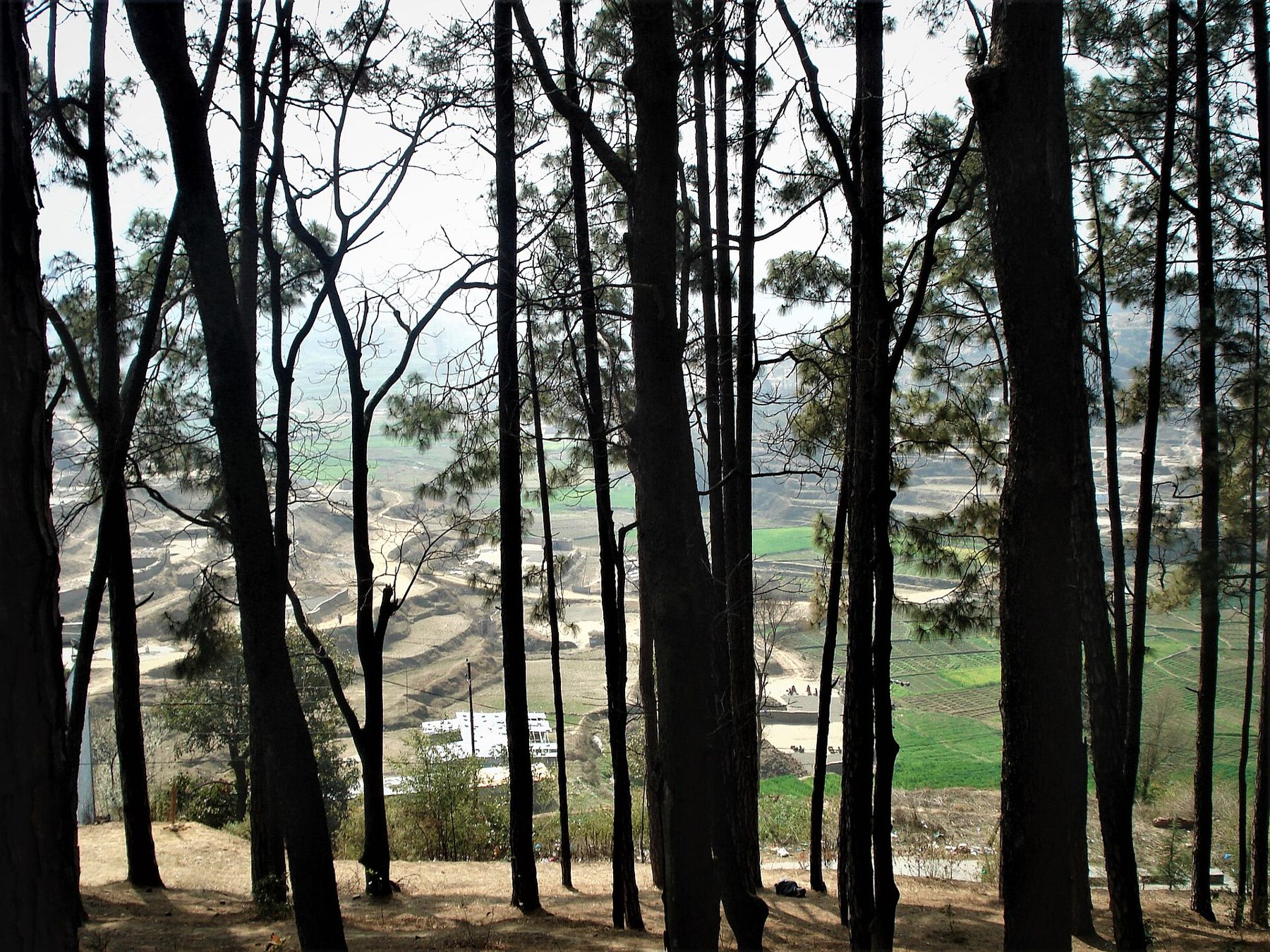
Another route goes from Bhaktapur, crossing the Manohara and climbing the ridge to the village, a walk of a couple of hours through farmland. The guide to Bhaktapur has more on that town, and the guide to the valley on foot covers seasons, buses and manners for walks like this.
Visiting well
Foreign visitors pay an entry fee at the edge of the village. Walk clockwise round the temple, remove your shoes where others do, and keep leather away from the shrine.
The temple is an active place of worship, with morning rites and festival days. Changu Narayan is one of the seven monument zones of the Kathmandu Valley World Heritage Site, along with the three Durbar Squares, Swayambhunath, Boudhanath and Pashupatinath. Of the seven, it is the most rural and the least crowded, and for that reason many visitors remember it most clearly.
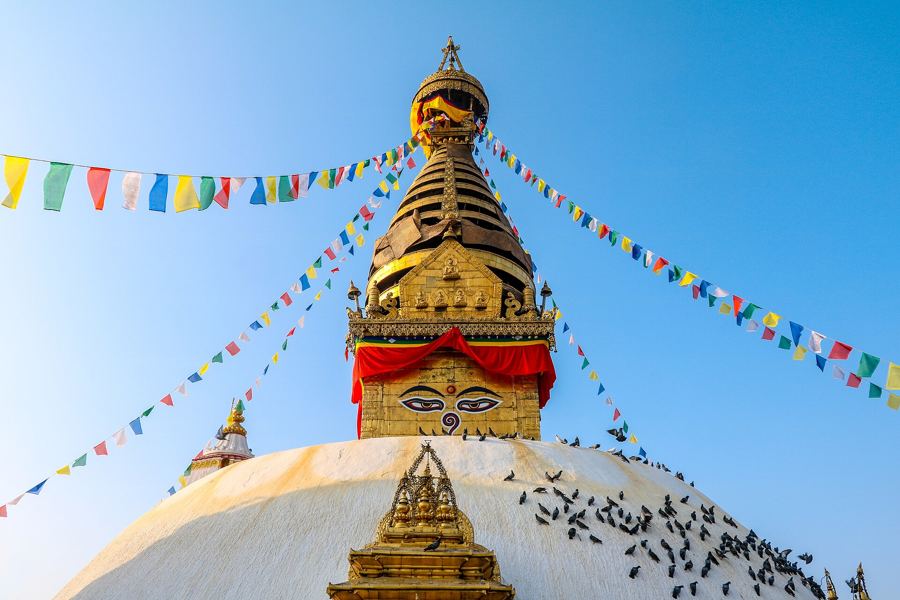 Next in shrines on the valley rimSwayambhunath, the hill of the self-arisen stupa