The road from Gorkha · Kirtipur
Kirtipur, the hill town that held out
A Newar town on a ridge south-west of Kathmandu, Kirtipur twice turned back the army of Gorkha and paid a terrible price when it finally surrendered in 1767.
- Era
- Many eras
- From Thamel
- Bus or taxi south-west towards the university
- Bring
- Water, good shoes, a scarf for temples
Kirtipur sits on a long ridge at the south-western edge of the Kathmandu Valley, its brick houses climbing two low hilltops above the fields. From below, the town looks like what it was in the eighteenth century: a fortress. In the Malla period it belonged to the kingdom of Patan, and its position made it the key to the south-west of the valley. That is why Prithvi Narayan Shah of Gorkha attacked it three times, and why its story is at the heart of the conquest of the valley.
Today Kirtipur is a busy Newar town, with Tribhuvan University spread across the flat land below it. The old core, on the ridge, is quieter than the royal cities and sees fewer visitors. It is a good place to understand the campaign of 1743-1769 on the ground, and the views from the top are among the best in the valley.
The ridge and the old town
The old town follows the line of the ridge, with lanes of stone steps and brick paving linking a chain of squares, temples and water spouts. Walking up from the bus stop, you climb past houses with carved windows, small shrines and courtyards where families dry grain and chillies. Some houses are old, many have been rebuilt, and the 2015 earthquake damaged several buildings, but the shape of the town has not changed much.
At the highest point stands the Uma Maheshwar temple, a temple to Shiva and Parvati reached by a stone stair guarded by elephants. Its terrace looks north across the valley towards Kathmandu and, on clear days, to the snow peaks beyond. The temple was badly damaged in 2015 and has been under repair since. Even from the stair, the view explains why an army would want this hill.
Between the two hilltops, the ridge dips into a saddle where the town's main lanes meet. Here you find water spouts sunk below the street, where people still fill vessels and wash, and small squares used for drying crops in the harvest season. Kirtipur's people have long been farmers as well as traders and craftsmen, and the fields below the ridge are still worked. Weaving was once a strong tradition in the town, and in some lanes you may still hear the sound of a loom.
Bagh Bhairab
In the middle of the town, Bagh Bhairab is Kirtipur's most important temple. It is dedicated to Bhairab in the form of a tiger, and its three-roofed building faces a square where people gather for worship and for festivals. The temple's outer walls carry old swords and shields, said to have belonged to the town's defenders in the wars with Gorkha. Whatever the exact history of each piece, they make the link between the temple and the sieges very direct.
Animal sacrifices are offered here on certain days, as at many Bhairab temples, and the square can be busy and bloody in the mornings. Visit respectfully, keep your distance during rituals, and ask before taking photographs. The carved struts under the roofs show deities and scenes worth studying when the square is quiet.
Chilancho stupa
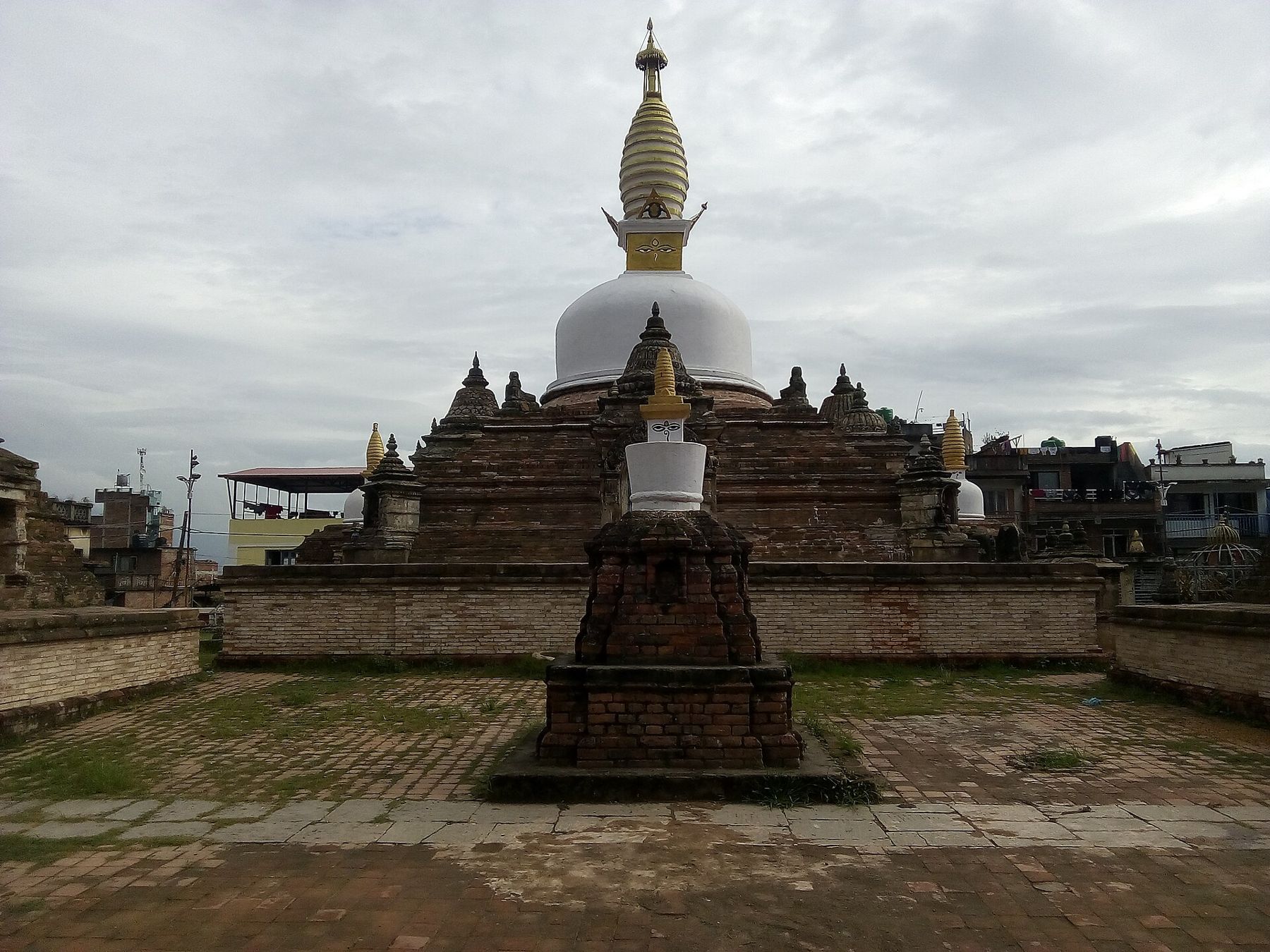
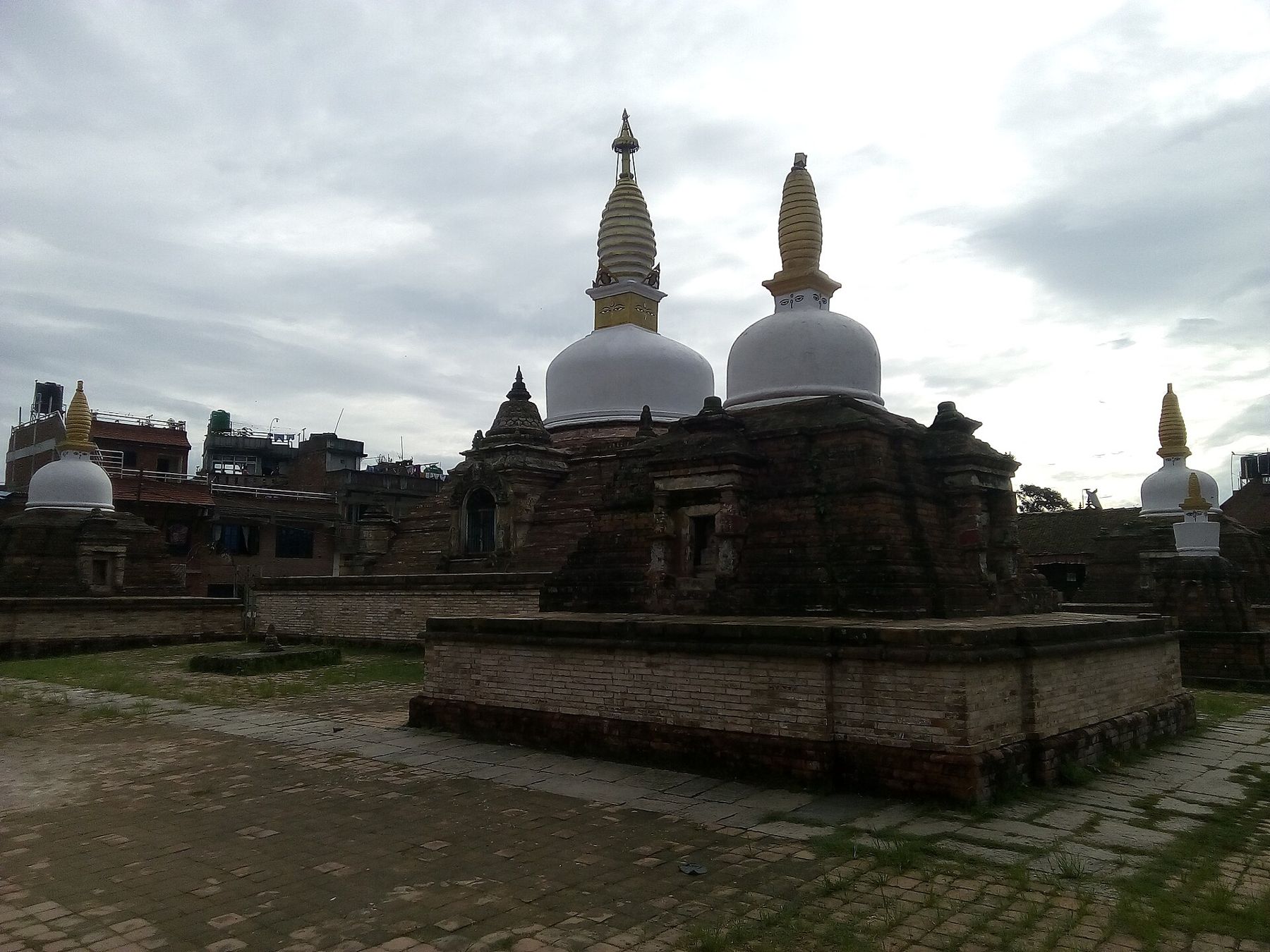
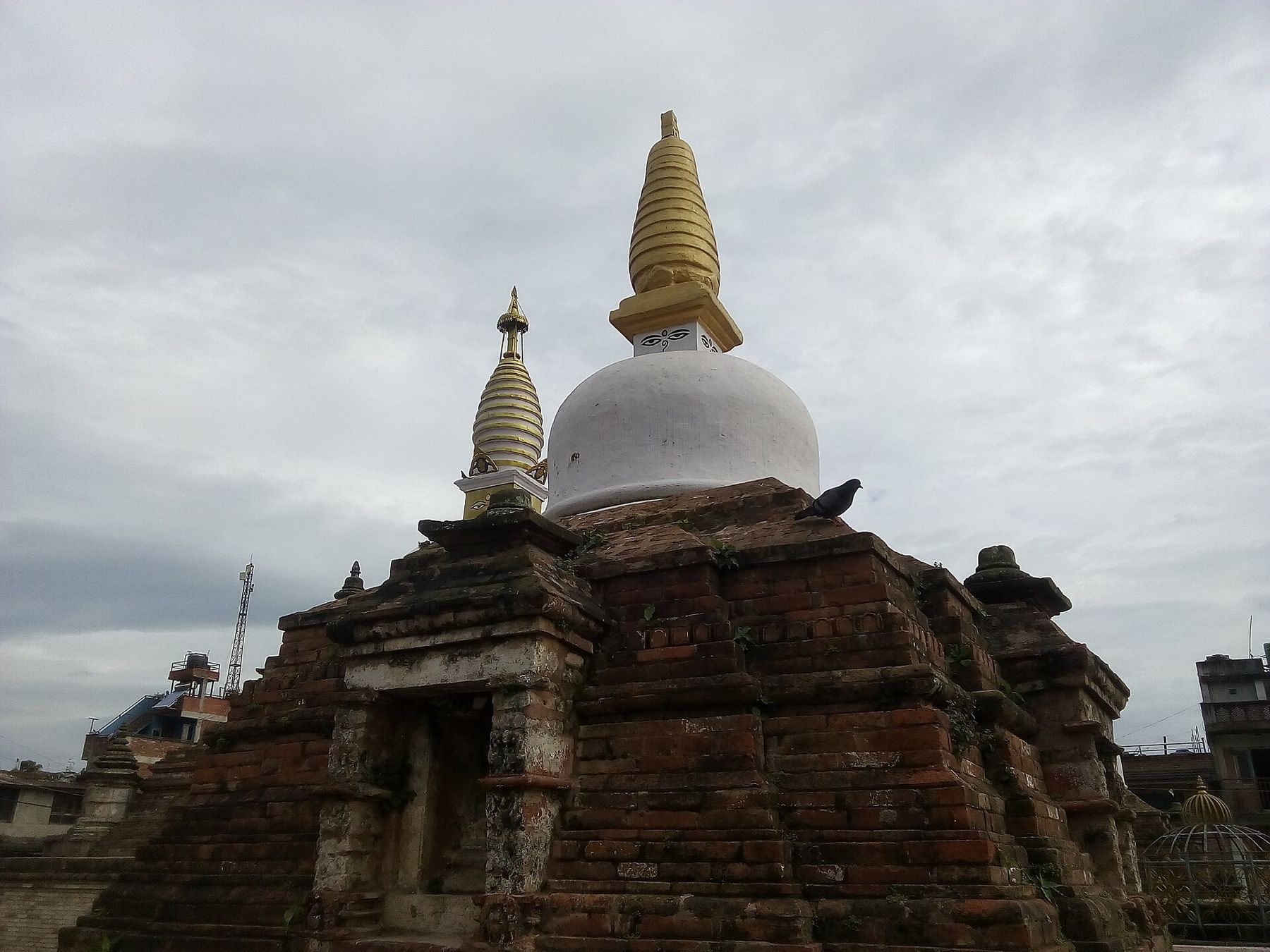
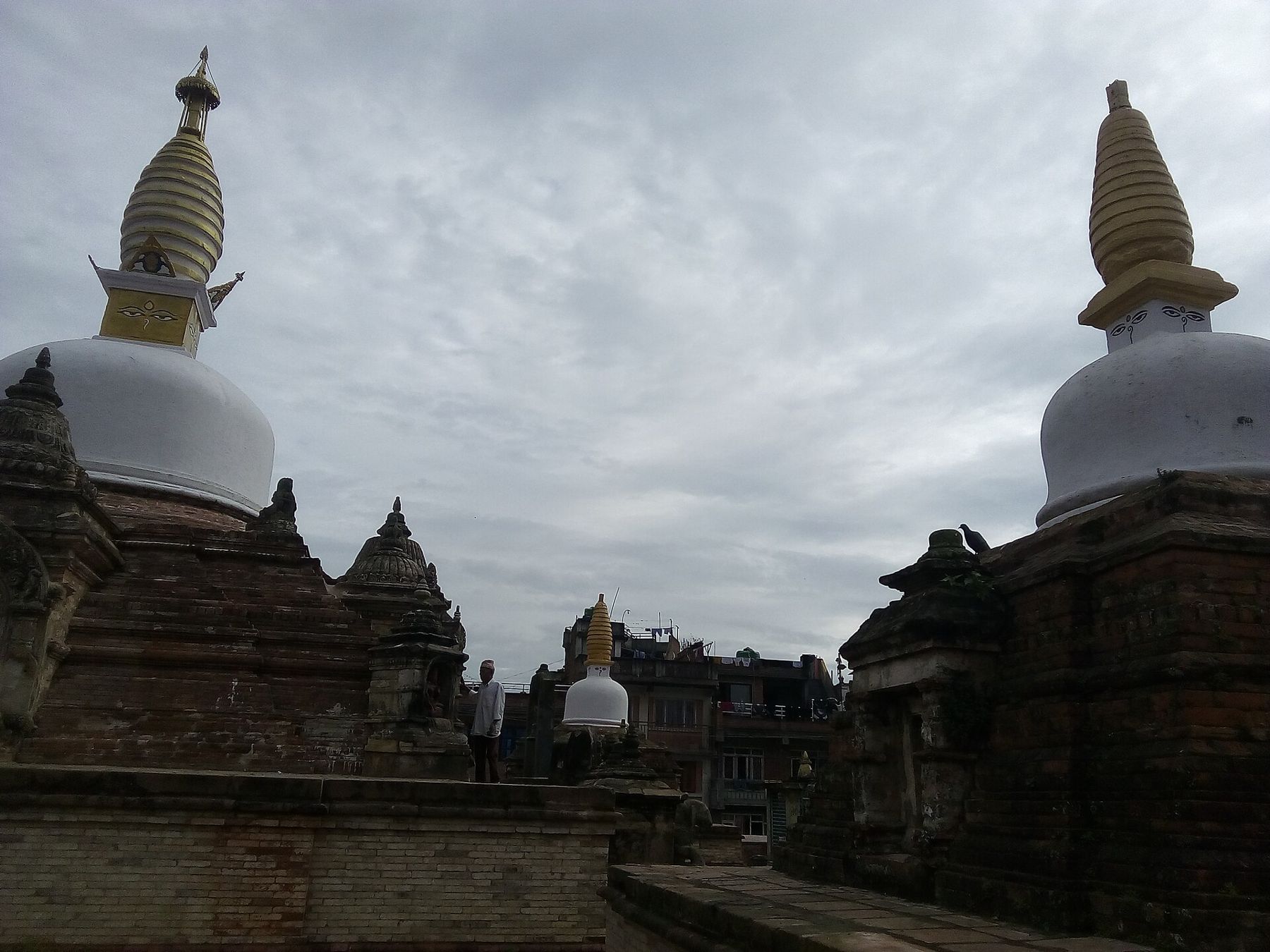
On the southern hilltop of the ridge stands the Chilancho stupa, a Buddhist monument surrounded by four smaller stupas and many little shrines. It dates from the early sixteenth century, which makes it one of the older surviving monuments in the town. The main stupa has a white dome, the painted eyes of the Buddha on its square upper section, and a gilded spire rising above it.
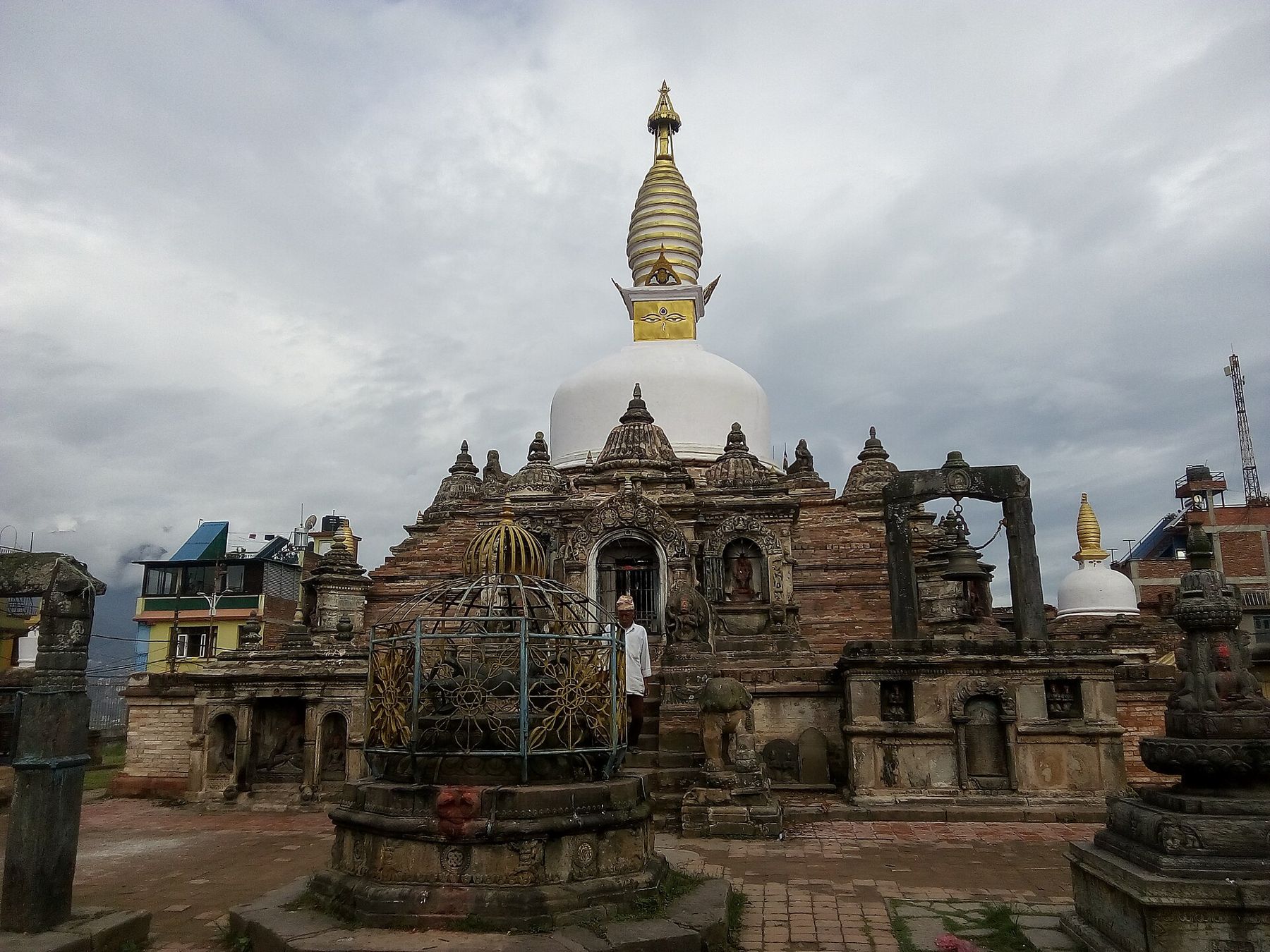
Around the stupa, walk clockwise as Buddhists do. The site is quiet for most of the day, a place where neighbours sit out the afternoon and children play. Kirtipur, like Patan and Kathmandu, has always had both Hindu and Buddhist communities, and the two hilltops, one crowned by a Shiva temple and one by a stupa, show that balance in stone.
The three sieges
Prithvi Narayan Shah became king of Gorkha in 1743 and soon turned his attention to the valley. After taking Nuwakot in 1744, he spent years cutting the valley's trade routes and capturing the forts around its rim. In 1757 he made his first assault on Kirtipur. It was a disaster for Gorkha. His commander Kalu Pande was killed in the fighting, and the king himself is said to have escaped only narrowly. The defenders of Kirtipur, with help from the valley kingdoms, drove the Gorkhali army back.
A second attack in 1764 also failed. The Gorkhalis then settled into a long blockade, cutting the town off from its fields and from the rest of the valley. In 1767, starving and isolated, Kirtipur surrendered. What followed is remembered to this day: as punishment, the noses of many of the town's men were cut off. The cruelty was meant to frighten the other cities into submission, and it is still a painful part of the town's memory.
The cruelty was meant to frighten the other cities into submission, and it is still a painful part of the town's memory.
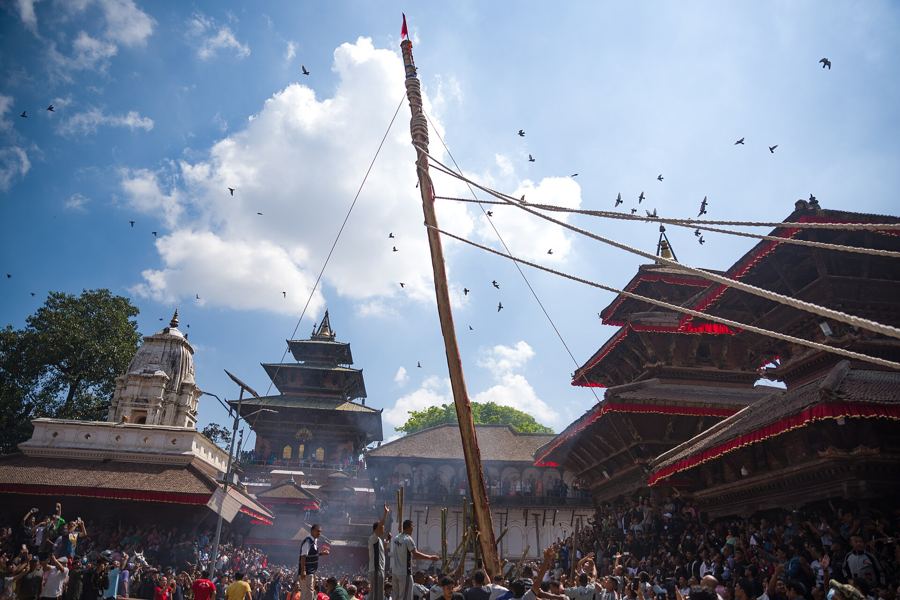
With Kirtipur taken, the road into the valley lay open. Kathmandu fell during Indra Jatra in September 1768, Patan soon after, and Bhaktapur in 1769. The whole sequence is traced in the guide to the unification route.
Visiting Kirtipur
Kirtipur is easy to reach from central Kathmandu by bus or taxi, heading south-west past the university. The old town is on foot only in most places, and the lanes are steep in parts; good shoes help. There is no heritage-zone fee of the kind charged in the royal cities. Small donations at temples are welcome.
- Start at the bottom and walk up through the lanes to Bagh Bhairab, then on to the Uma Maheshwar terrace.
- Cross the ridge to Chilancho stupa for the Buddhist side of the town.
- Come in the late afternoon for the light on the valley and the view of the mountains on clear days.
- Eat in the town: Kirtipur has a strong tradition of Newar cooking, and the guide to Newar food explains the dishes.
Above all, take time to stand on the ridge and look out across the valley. From here you can see the ground over which the sieges were fought, and imagine how the town, high and walled, looked to an army approaching from the west.
Kirtipur's story also shows how history is remembered differently by different people. For many Nepalis, the campaign of Prithvi Narayan Shah is the founding story of the nation. For the people of Kirtipur, the sieges are also a story of resistance and loss. Both memories live side by side in the town, and visitors do well to listen to both.
 Next on the roadIndra Jatra, the festival of the living goddess