The road from Gorkha · Kirtipur
Kalu Pande and the kajis of Gorkha
The unification of Nepal is told as one king's story, but it was fought by a circle of commanders and ministers. The first and best remembered of them died before Kirtipur.
- Era
- Shah
- From Thamel
- Bus or taxi south-west to Kirtipur
- Bring
- A notebook, good shoes, water
The campaign that turned the small hill kingdom of Gorkha into the kingdom of Nepal is usually told through one man, Prithvi Narayan Shah. But no king fights alone. Around him stood a circle of nobles, ministers and commanders, the men who led his armies, ran his court and carried his plans into the field. Chief among them in the early years was Kalu Pande, the kaji who died at the first battle of Kirtipur in 1757.
If you arrive here from reading about him, this page is a short guide to who he was, what the office of kaji meant, and where you can stand on the ground he fought over.
The office of kaji
In the hill kingdoms of eighteenth-century Nepal, a kaji was a senior officer of state, combining the roles of minister and military commander. Kajis advised the king, led armies in the field, managed the administration of conquered lands and negotiated with neighbours. The office was held by members of a small number of noble families of Gorkha, and the families competed for it fiercely.
Under Prithvi Narayan Shah and his successors, the number of kajis and their exact powers changed with the needs of the time. A chief kaji, later called mulkaji, came to head the circle. In practice, a kaji's power depended on his standing with the king and on the strength of his family and followers at court. The title survived well into the nineteenth century, through the rivalries that shaped Nepal's politics long after the unification.
Kalu Pande
Kalu Pande came from a noble family of Gorkha and served as one of Prithvi Narayan Shah's most trusted commanders in the first years of his reign. He was made a kaji early in the campaign, and he took part in the wars in the hills around the Kathmandu Valley that followed the capture of Nuwakot in 1744. Accounts of the period present him as both a soldier and an adviser, a man whose judgment the young king respected.
He is remembered above all for the first assault on Kirtipur in 1757. Accounts of the campaign say that he advised against attacking the town at that moment, judging that the army was not yet ready and that Kirtipur's position was too strong. The attack went ahead. In the fighting outside the town, Kalu Pande was killed, and the Gorkhali army was driven back. The king himself escaped only narrowly.
It was the worst defeat of the campaign, and a lesson. When Gorkha returned to Kirtipur, it was with more patience: a second attack in 1764, then a long blockade that ended with the town's surrender in 1767.
It was the worst defeat of the campaign, and a lesson.Also in the valleyKirtipur, the hill town that held out
The other kajis and their families
Kalu Pande was one of several commanders in the king's circle. Members of the Basnyat family led armies in many of the campaigns, and the Kunwar family also produced commanders, among them Ram Krishna Kunwar, an ancestor of the Rana family that later ruled Nepal for a century. Other noble families of Gorkha, among them the Thapas, rose to power in the generations that followed.
Kalu Pande's own family remained at the centre of affairs. His son Damodar Pande became one of the most powerful men in Nepal at the end of the eighteenth century, leading armies and serving as chief kaji, before he was executed in 1804 amid the struggles at court. The rivalry between the Pande and Thapa families, and later the rise of the Ranas, shaped the politics of the kingdom through much of the nineteenth century. The office of kaji, in other words, was not only a military rank but a prize to be fought over.
How he is remembered
In Nepal, Kalu Pande is remembered as a loyal and capable commander who gave his life for the unification. His name appears in school histories alongside the king's, and he is often held up as an example of devotion to the state. His death at Kirtipur is told as a turning point, the moment when the king learned that the valley could not be taken by force alone.
In Kirtipur itself, the memory of the campaign is more complicated. The town honours its own defenders, who twice turned back the Gorkhali army, and remembers the punishment that followed its surrender. Visitors do well to hold both stories in mind: the commander who fell, and the town that resisted.
A place to stand
There is no single monument to visit for Kalu Pande, but the places of his story can be seen. In Gorkha Durbar, the hilltop palace where the campaign was planned, you stand where he and the other kajis met the king. At Nuwakot, the fort taken in 1744, you see the first prize of the wars he fought in.
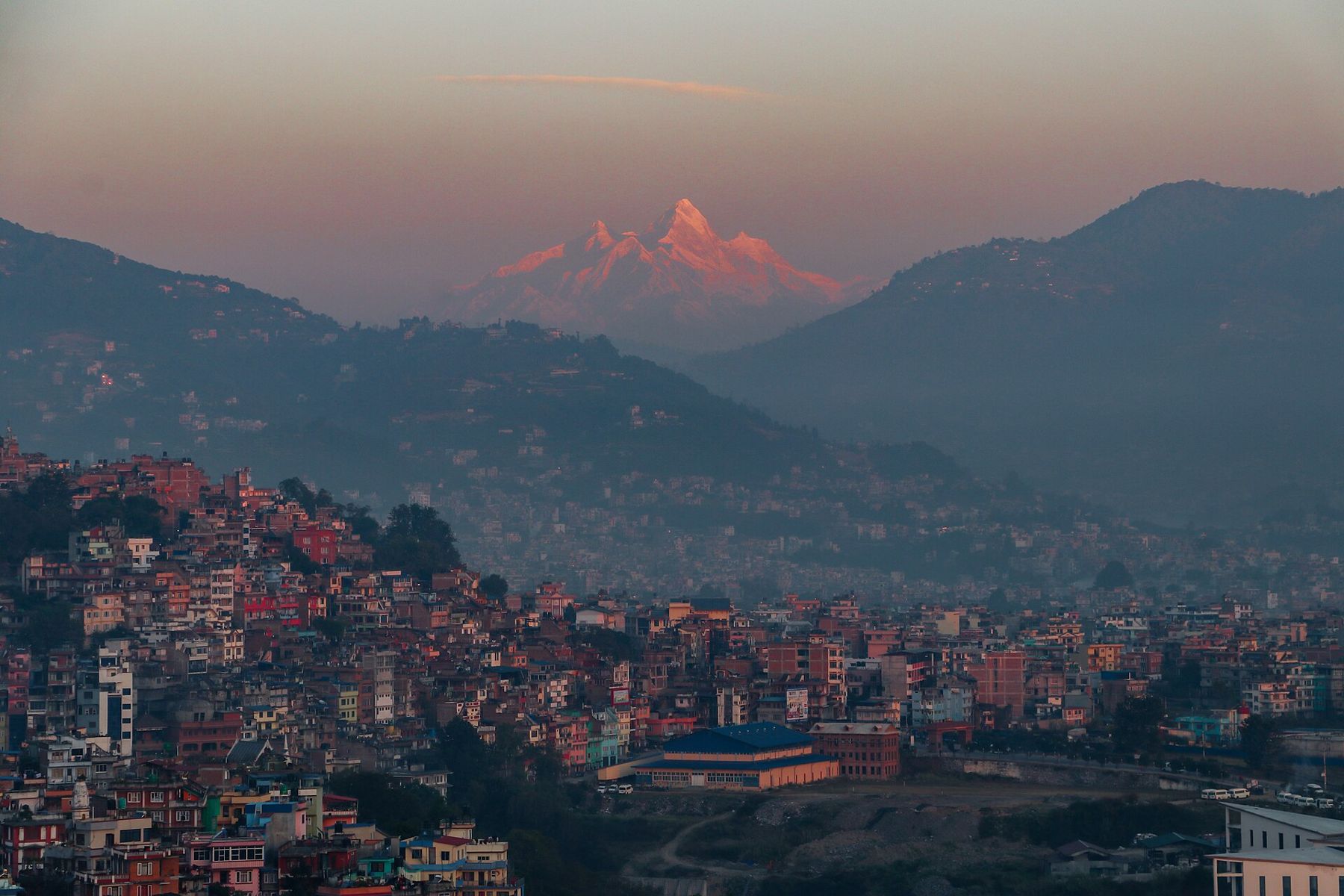
Most of all, go to Kirtipur. Walk up through the lanes to the ridge and look west and south over the fields below, the ground over which the Gorkhali army advanced in 1757. From the top of the town you can see how strong its position was, and why a careful commander might have hesitated. The unification route guide links these places into a single journey.
What is known and what is told
Much of what is known about Kalu Pande comes from the traditions of the Shah court and of the noble families, written down in later chronicles. Details vary between accounts, including dates in his career and the exact words of his advice before Kirtipur. What is clear is the outline: a senior commander of Gorkha, trusted by the king, killed in the first assault on Kirtipur in 1757, and remembered as one of the founders of modern Nepal.