The royal cities · Patan
Patan, the city of fine arts
Lalitpur, Yala to its Newar people, has the most complete of the valley's royal squares, a palace museum that explains the rest, and lanes where bronze is still cast by hand.
- Era
- Malla
- From Thamel
- A short taxi ride south over the river
- Bring
- Comfortable shoes, a scarf, small notes
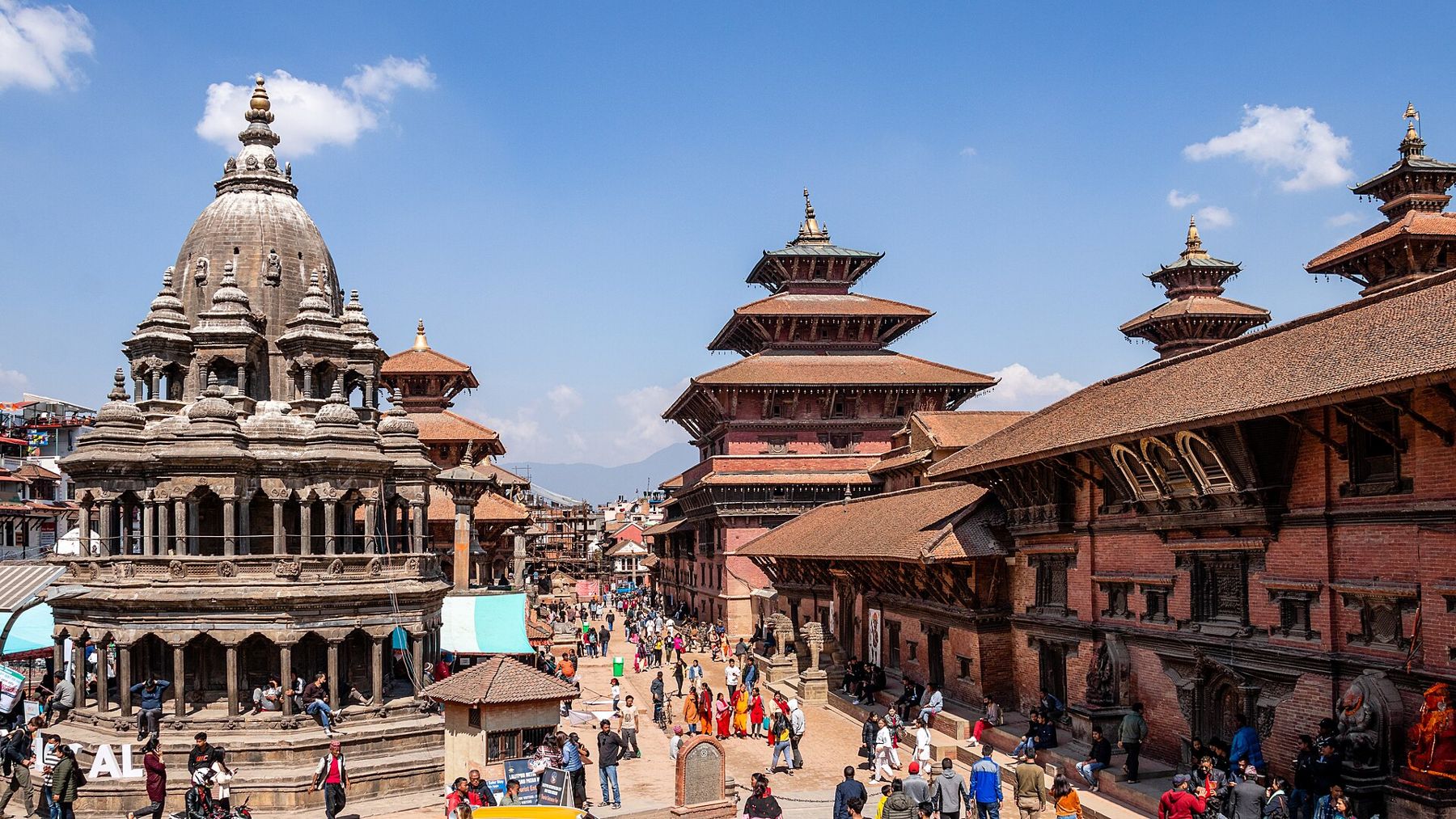
Patan sits just south of the Bagmati River, so close to Kathmandu that the two have long since grown together, yet it keeps a character of its own. Its official name is Lalitpur, its Newar name is Yala, and it has long been known for its craftsmen: the bronze casters, the woodcarvers and the stone masons whose work fills the temples of the whole valley and beyond. If Kathmandu's Durbar Square is the most crowded of the three royal squares, Patan's is often called the most harmonious.
The city was one of the three Malla kingdoms of the valley, sometimes allied with its neighbours and often at odds with them. Its kings built their palace and temples side by side in the square, and the result is a single composition of brick, timber and stone that you can take in from one place. In 1768, weeks after Kathmandu fell, Patan too passed to the king of Gorkha.
The square
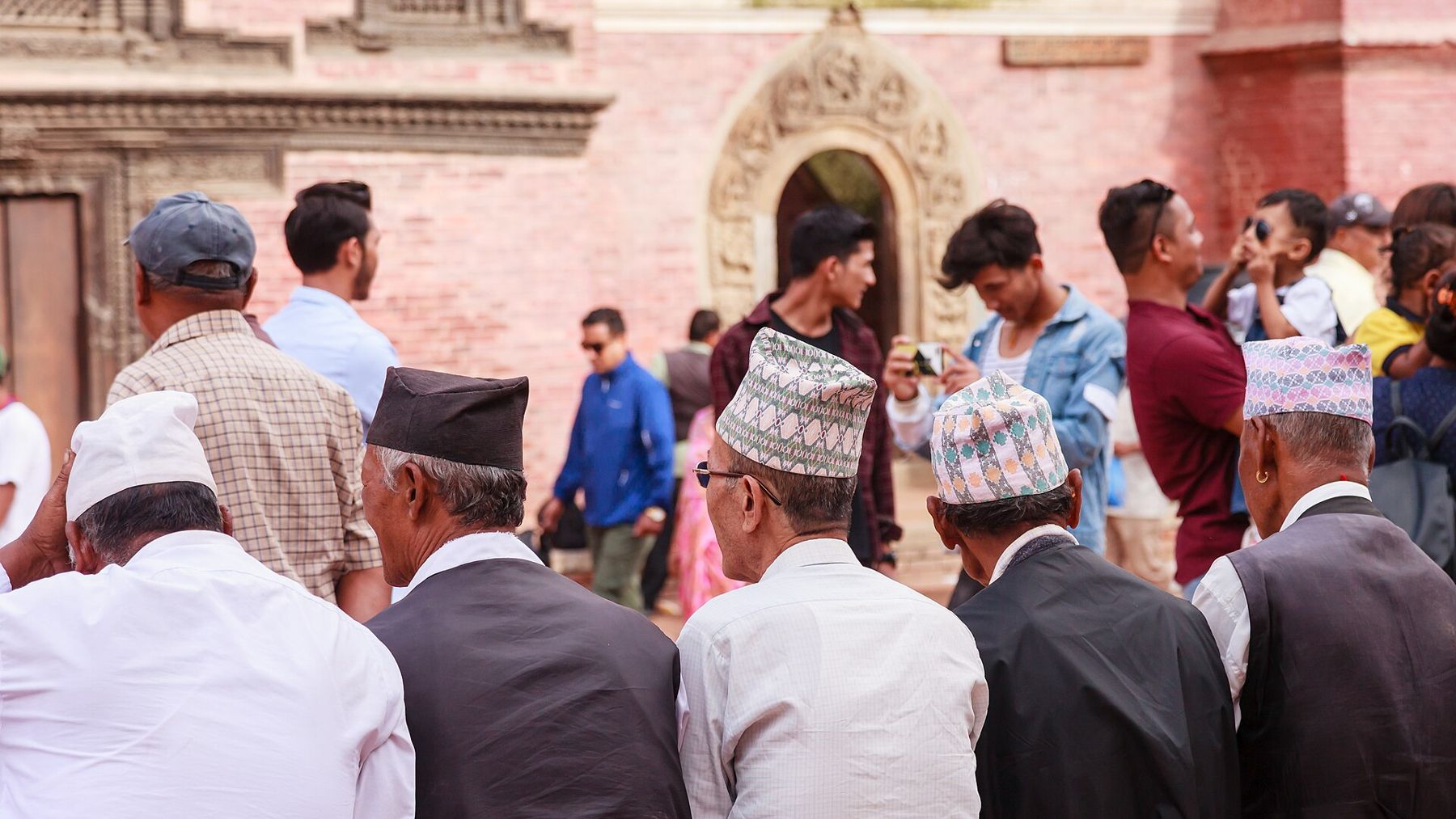
Patan Durbar Square runs north to south, with the palace on its eastern side and a row of temples facing it on the west. Arrive early and walk its length slowly before going inside anything. The temples stand on stepped plinths in front of the palace, and the steps serve the whole city as benches: older men in their caps sit out the morning there, and families gather in the late afternoon.
Among the temples, look for the Vishwanath temple with stone elephants at its stair, the Bhimsen temple near the northern end, dedicated to the patron god of traders, and the octagonal stone temple to Krishna. A great bell hangs under its own roof, rung for worship and once used to summon the people. Some of the temples here fell in the 2015 earthquake; most have since been rebuilt in the traditional way, and in a few years the new timber will darken to match the old.
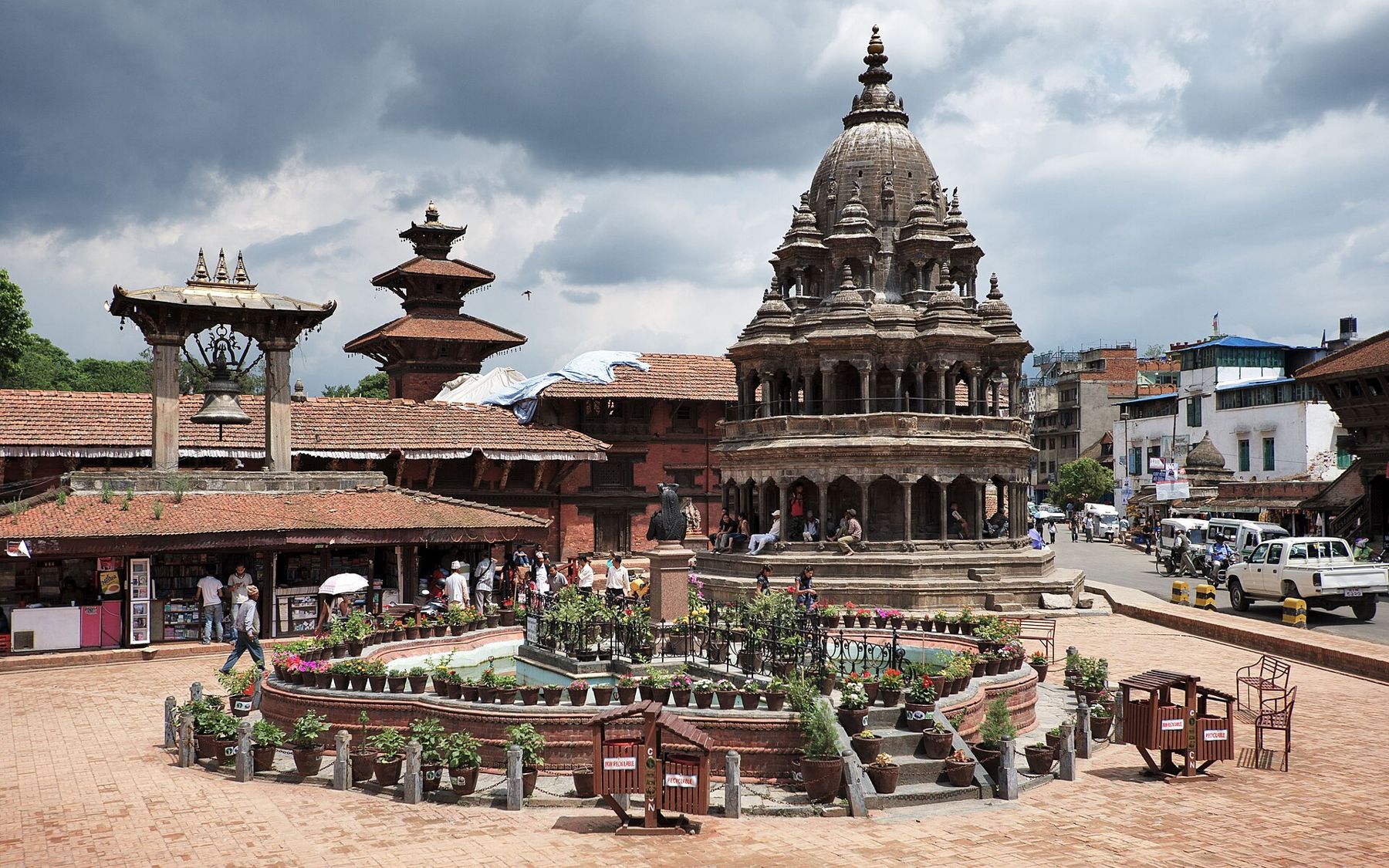
Krishna Mandir
The most famous building in the square is the Krishna Mandir, built of stone in the seventeenth century under King Siddhi Narasimha Malla. It is unlike the brick and timber temples around it: a shikhara of carved stone, with open pavilions on its lower storeys and a tall spire above. Around the first floor runs a frieze of small carved scenes from the Mahabharata, and a second band higher up shows scenes from the Ramayana. With patience you can follow battles, journeys and meetings of gods and heroes all the way round.
The temple is still in daily use. Non-Hindus are generally not allowed inside, so admire it from the square. In late summer the festival of Krishna's birth brings crowds of worshippers who queue through the night, and the square fills with oil lamps and singing. Facing the temple, on a pillar, a kneeling figure of Garuda, Vishnu's mount, gazes at the shrine with folded hands.
Facing the temple, on a pillar, a kneeling figure of Garuda, Vishnu's mount, gazes at the shrine with folded hands.
The palace and the Patan Museum
The palace on the eastern side is built around several courtyards. The northern one, Keshav Narayan Chowk, holds the Patan Museum, which many travellers consider the best introduction to the art of the valley. Its galleries show bronze and stone images of Hindu and Buddhist deities, explain how they were made, and help you read the symbols you see on every street: the hand gestures, the weapons, the mounts of the gods. The building itself, restored with great care, is one of the finest examples of Newar palace architecture.
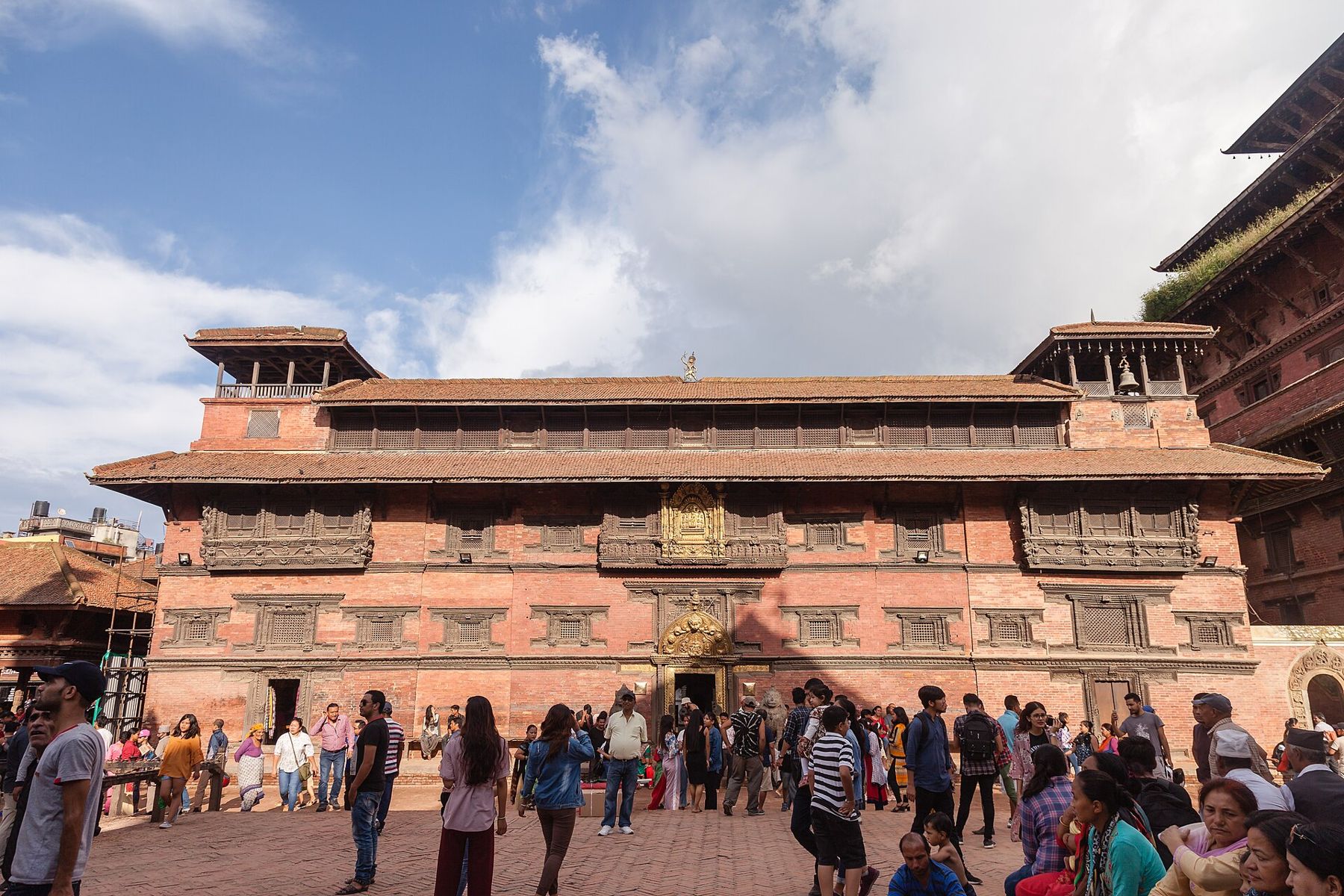
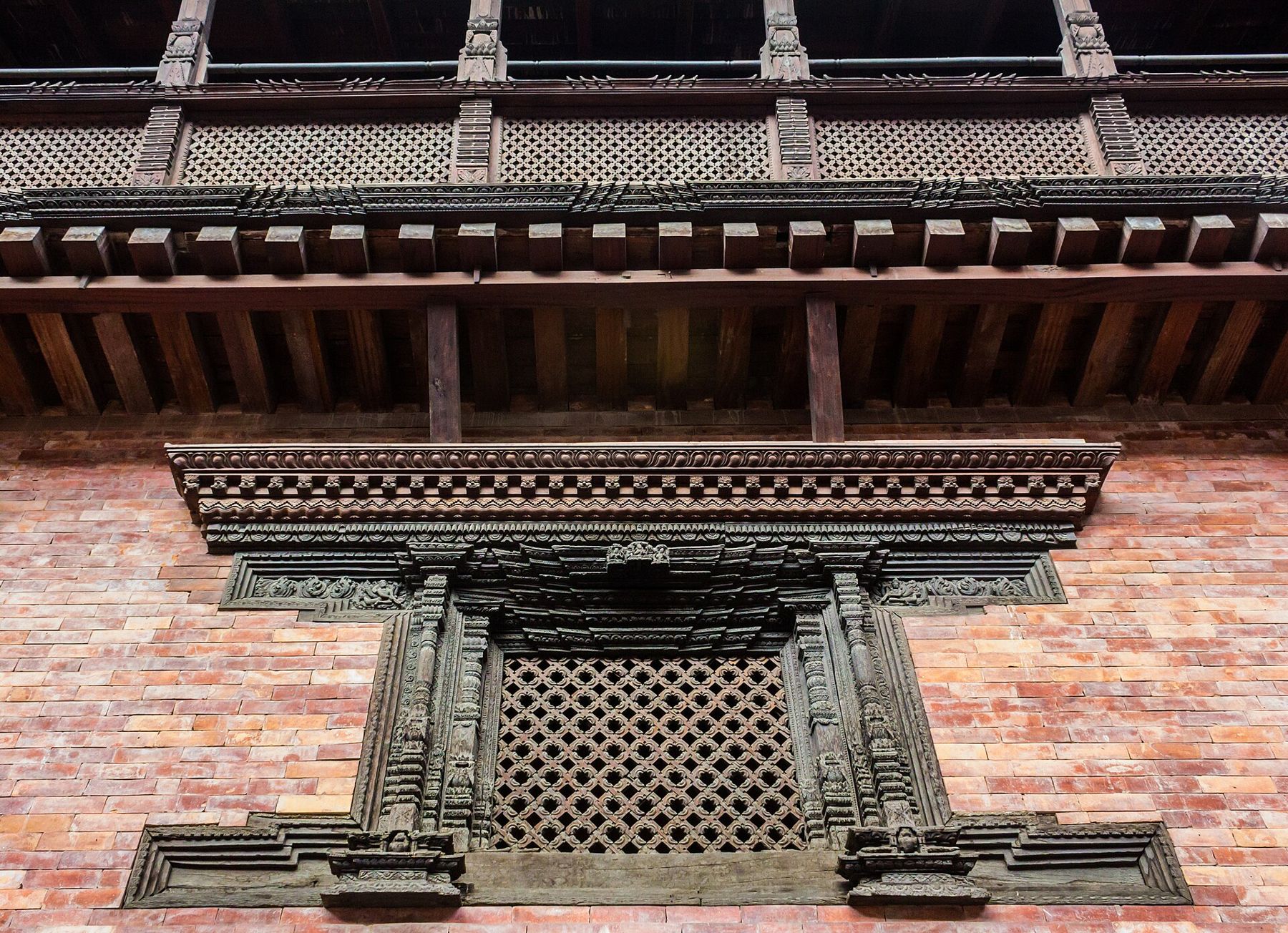
Take time in the museum's courtyards as well as its rooms. The carved windows and doorways show the full range of Newar craftsmanship, from tight lattice to frames carved with deities and serpents. South of the museum, Mul Chowk is the oldest of the palace courtyards, and beyond it Sundari Chowk holds a sunken royal bath, the Tusha Hiti, lined with carved stone. Access to the inner courtyards varies.
The Golden Temple and the courtyards
A short walk north of the square, through a plain doorway, lies Hiranya Varna Mahavihar, better known as the Golden Temple. It is a Buddhist monastery courtyard, called Kwa Bahal locally, and its main shrine has a gilded facade, gilded roofs and a courtyard crowded with images, bells, lamps and prayer wheels. Shoes and leather goods are left at the entrance. Young boys from the community serve as temple priests for a period, and the place feels lived in rather than displayed.
Walk around the courtyard clockwise, as the worshippers do, and look up at the gilded roofs and the carved struts beneath them. Photography may be restricted in parts of the monastery, so look for signs or ask before raising a camera. A quiet visit in the early morning, when the lamps are being lit, shows the courtyard at its best.
Kwa Bahal is one of many such courtyards in Patan. The city has dozens of bahals and bahis, Buddhist monastery courtyards that were the centres of Newar neighbourhoods. Wandering the lanes, you will find small passages leading into squares with stupas, shrines and sunken water spouts. The guide to bahals and courtyards explains how to step into them respectfully.
Metalworkers and a slow afternoon
Patan's lanes still hold workshops where bronze images are made by the lost-wax method, and where sheet metal is hammered into repousse figures. You can often hear the tapping before you see the workshop. Watching is usually welcome if you ask, and buying directly is possible, though quality and prices vary widely; the guide to Patan's metalwork and woodcarving has advice on buying with care.
The heritage zone around the square charges foreign visitors an entry fee, and the museum has its own ticket. A good day in Patan starts in the square at sunrise, moves through the museum when the sun is high, and ends in the lanes and courtyards in the late afternoon, when the brick glows and the shrines are lit. The city is close enough to visit from Kathmandu, but it rewards a night or two.
Patan also has its own great festival. In spring and early summer, the tall chariot of Rato Machhindranath, a rain-giving deity worshipped by Hindus and Buddhists alike, is pulled through the city over several weeks, the longest chariot festival in the valley. It ends at Jawalakhel with the showing of a jewelled vest, a ceremony that draws huge crowds. The dates follow the lunar calendar, and streets close along the chariot's route.
 Next on the roadBhaktapur, the potters' city