Newar craft and custom · Patan
Lost-wax casting and woodcarving in Patan
In the lanes north of Patan Durbar Square the tapping of hammers on copper is still the city's soundtrack: a craft of gods in metal and wood that the Newars have practised for well over a thousand years.
- Era
- Living tradition
- From Thamel
- A short taxi ride south to Patan
- Bring
- Questions, time and room in your luggage
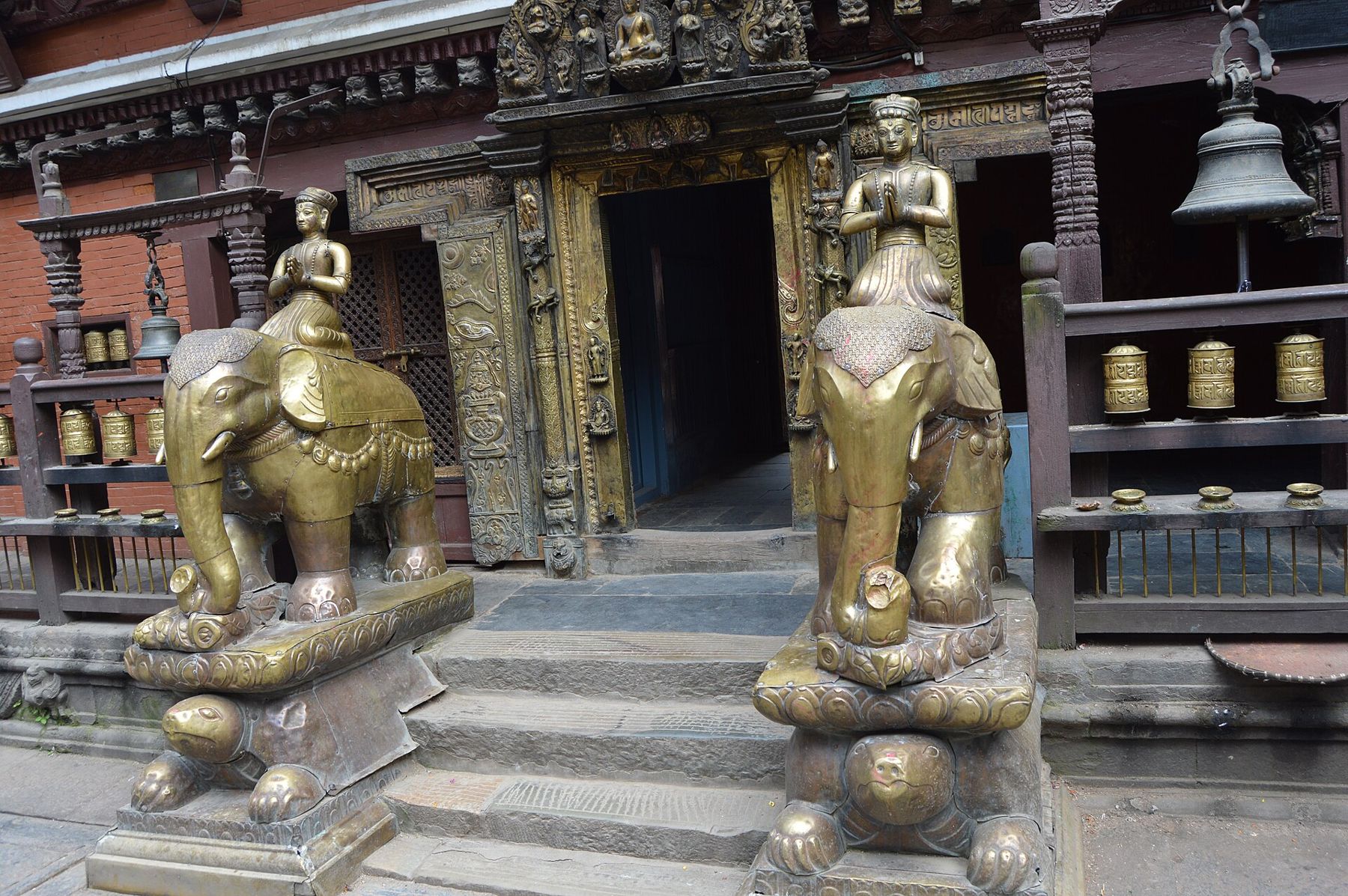
Patan, Yala in Newar, has been the valley's city of craftsmen for centuries. Its name in Sanskrit, Lalitpur, is usually explained as the beautiful city, and much of that beauty is made of metal and wood: gilded roofs and banners, bronze guardians at temple doors, struts and windows carved with gods. The workshops that made them are still here, in the lanes around Durbar Square, and many of the families still follow the trade their grandparents followed.
A craft that travelled
Newar metalwork was famous far beyond the valley. Images cast in the Kathmandu Valley were carried into Tibet, and Newar craftsmen worked in Tibetan monasteries for centuries. The best known of them, Araniko, a young Newar artist of the thirteenth century, travelled to Tibet and then to the court of Kublai Khan, where he worked on Buddhist images and buildings and is remembered for the White Stupa in Beijing.
In Patan the craft has been passed down mainly through Buddhist families of the Shakya and Vajracharya groups, whose homes cluster around the city's monastery courtyards. The guide to bahals and courtyards explains how those courtyards work as neighbourhoods. A walk through them is also a walk through the workshops.
Lost-wax casting
Most bronze and copper images in Patan are made by the lost-wax method, one of the oldest ways of casting metal in the world. The steps are simple to describe and slow to master.
- The image is modelled in wax, often a blend of beeswax and resin, with every finger, jewel and fold of cloth worked by hand. Large figures are made in several pieces.
- The wax model is coated in layers of fine clay mixed with other materials, with small channels left open, and allowed to dry.
- The mould is heated. The wax melts and runs out, leaving a hollow in the exact shape of the image. This is the wax that is "lost".
- Molten metal, usually a copper alloy, is poured into the hot mould.
- When the metal has cooled, the clay is broken away. Each mould is used only once, so each casting is unique.
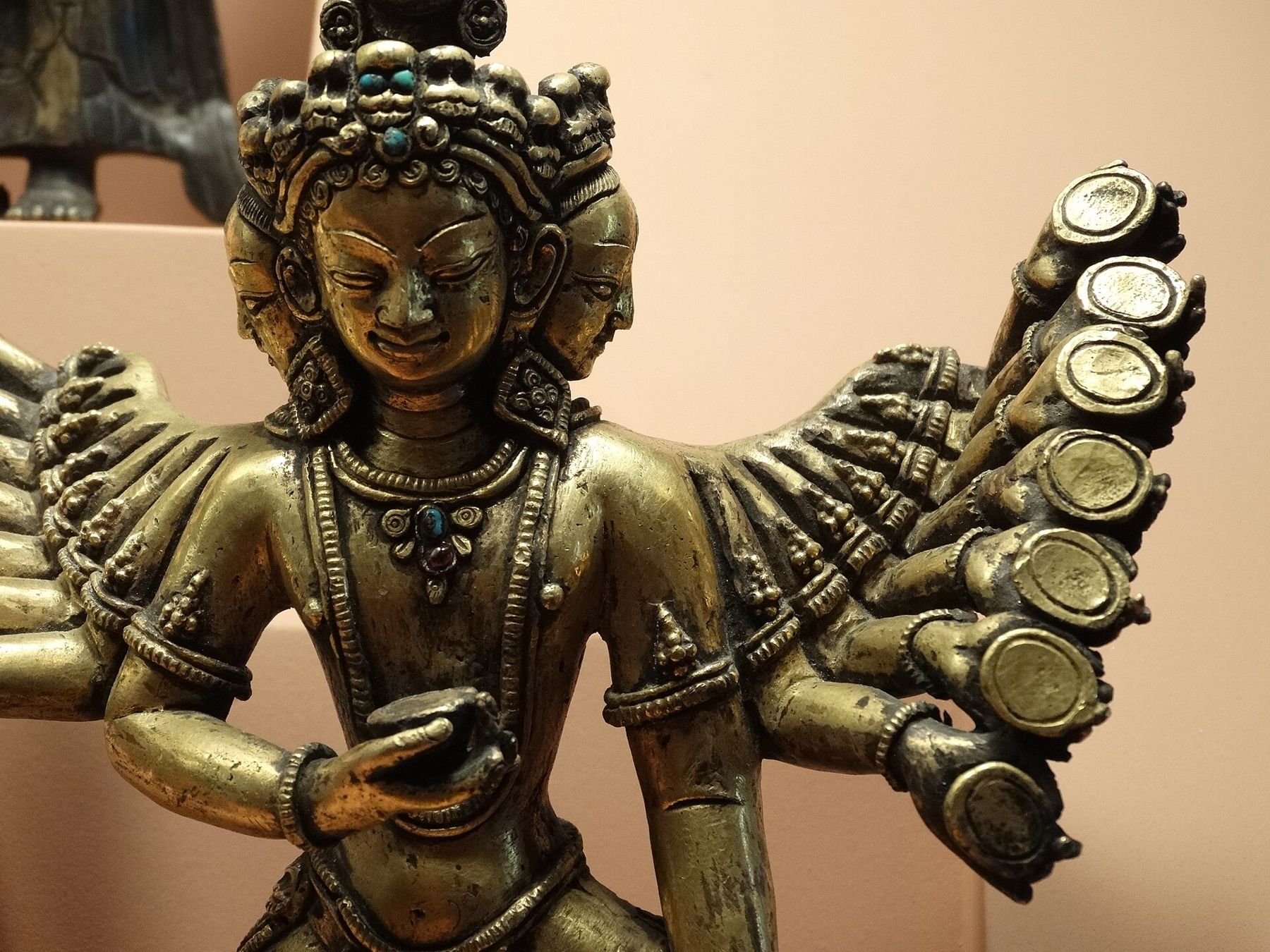
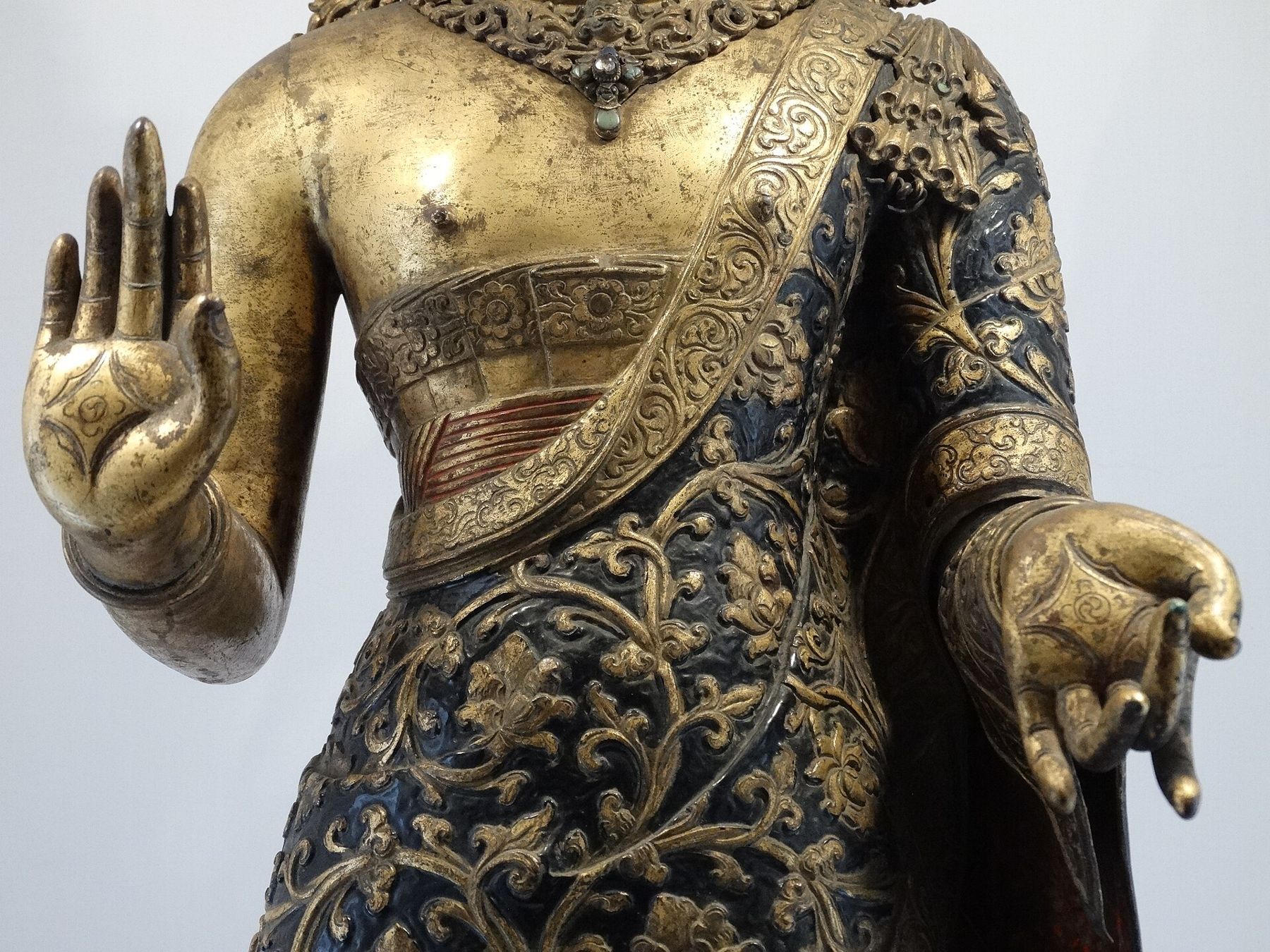
A raw casting is rough. It then goes to chasers, who spend days or weeks with fine chisels and punches sharpening the details, cleaning the surface and engraving patterns. Many images are then gilded, and the faces of Buddhist figures are often painted with fine detail, the final touch that brings the image to life for worship.
Repoussé, the hammered sheet
The second great technique is repoussé. Here a sheet of copper or other metal is laid face down on a bed of pitch and hammered from the back, so that the design rises on the front. The metalworker turns the sheet again and again, working from both sides with punches and small hammers until figures stand out in high relief.
Repoussé is used for the larger works that cannot easily be cast: the toranas over shrine doors, the long metal banners that hang from temple roofs, masks of deities, the panels that clad doorways and the gilded roofs themselves. Look at Kwa Bahal, the Golden Temple, described in the guide to Patan Durbar Square, and you are looking largely at repoussé.
The carvers
Wood is the other material of the Newar city. Carvers make roof struts, doors, windows, lintels and images, working mainly in sal and other hard timbers, with chisels and mallets that have changed little in centuries. Their designs follow traditions handed down in the workshop: deities on the struts, serpents along the frames, small figures in the corners.
Bhaktapur is the best-known carving town, but Patan's workshops are just as busy, especially since the earthquake of 2015 created a great need for new struts, windows and doors to replace those broken or lost. The guide to Newar windows explains what to look for in the finished work.
Where the eye should go
Start at the Patan Museum, in part of the old palace on Durbar Square. Its collection of bronzes and its explanations of how they were made give you the eye you need for the rest of the day. Then walk north from the square, into the lanes around Kwa Bahal and beyond, where workshops open onto the street and the sound of hammering guides you.
Watching is often welcome if you ask first and keep out of the way. Remember that a workshop is a place of work, sometimes a family home as well, and that the images being made are, for many of the people making them, gods in the making.
Buying with care
Patan is one of the best places in the valley to buy metalwork and carving, and also one of the easiest places to overpay for poor work. A few points help.
- Look at the finish. On a good casting the fingers, faces and jewellery are sharp and even. Blurred details, rough seams and pitted surfaces suggest a hurried copy.
- Ask about the gilding. Traditional fire gilding wears slowly and has a deep colour; cheap gold paint looks flat and rubs off. Ask what has been used.
- Weigh it in your hand. Solid, well-cast pieces are heavy for their size.
- Take your time. Visit several workshops before you decide, and do not feel obliged to buy after a demonstration.
- Be wary of "antiques". Nepal restricts the export of old objects of cultural value, and genuinely old religious images belong in their temples. Anything that looks old may need a certificate before it can leave the country.
Prices depend on size, metal, finish and the skill of the maker, and bargaining is normal in many places. Pay what the work is worth to you, and remember that the best purchases support families who keep one of Asia's great crafts alive.
 Next in newar craft and customIndra Jatra, the festival of the living goddess