The royal cities · Bhaktapur
Bhaktapur, the potters' city
The easternmost of the valley's royal cities, Khwopa keeps its brick lanes, its five-roofed temple and its potters' wheels; it was the last Malla capital to fall, in 1769.
- Era
- Malla
- From Thamel
- Bus or taxi east across the valley
- Bring
- Small notes, a scarf, an appetite for curd
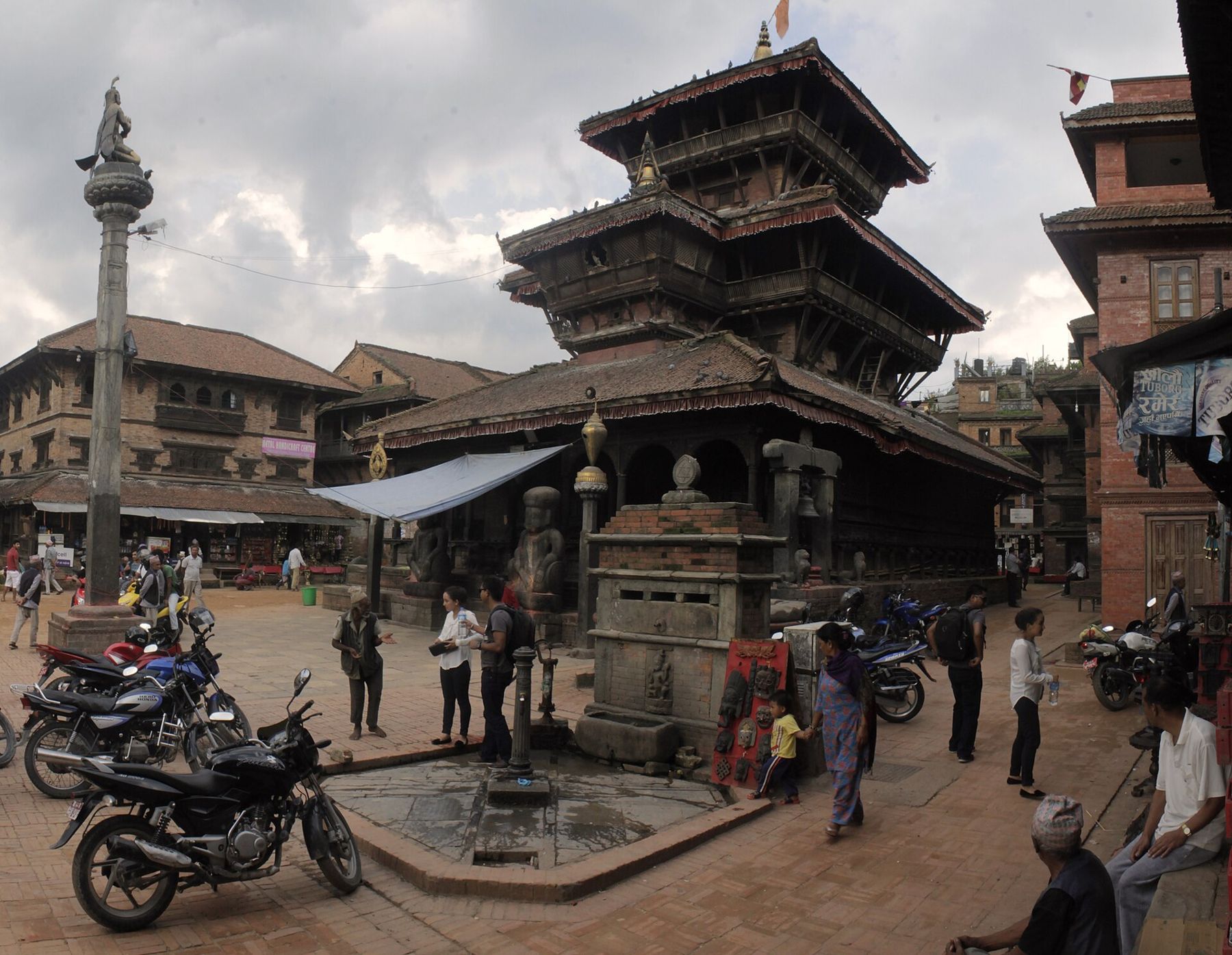
Bhaktapur lies at the eastern end of the Kathmandu Valley, on a low ridge above the Hanumante River. Its Newar name is Khwopa, and for much of the Malla period it was among the strongest of the valley kingdoms. It was also the last of the three royal cities to fall to Gorkha, in 1769, a year after Kathmandu and Patan. Its last king, Ranajit Malla, is remembered for leaving his city for a pilgrim's exile in Varanasi.
Today Bhaktapur is a town of brick lanes, sunken water spouts and squares with temples, where farming families still dry grain in the courtyards and potters shape clay in the open. Many visitors come for a day from Kathmandu. Those who stay overnight see a different town once the day buses leave.
Durbar Square
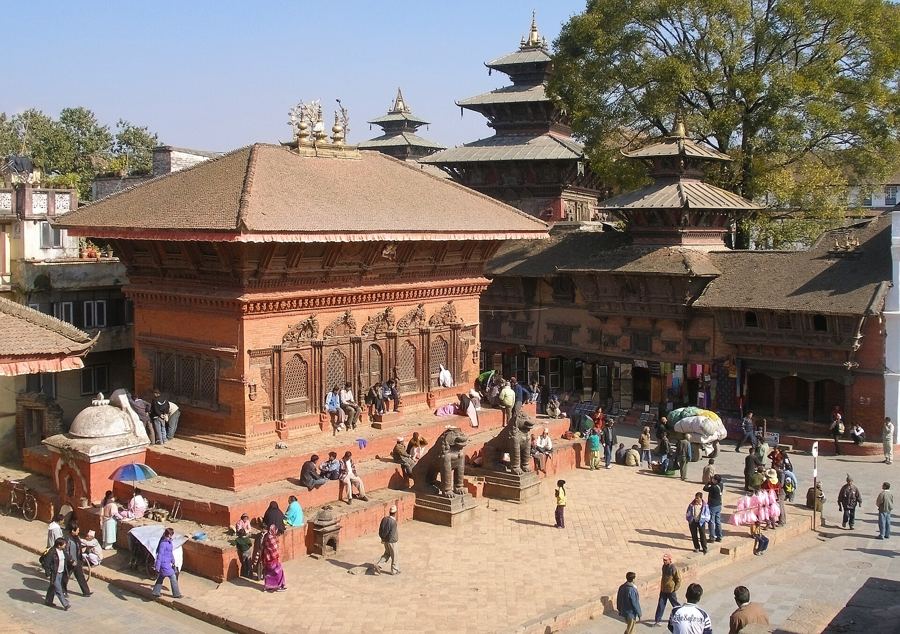
Bhaktapur's Durbar Square is wider and more open than those of Kathmandu and Patan, partly because the earthquake of 1934 destroyed many of its buildings, which were never rebuilt. The palace on the northern side is known for its fifty-five windows, a long row of carved wooden frames along the upper floor. Next to it stands the Golden Gate, a gilded doorway made under Ranajit Malla, with a figure of the goddess Taleju above the door and a garuda at its peak. It leads towards the palace's inner shrine of Taleju, which is closed to non-Hindus.
The square suffered again in 2015, when the Vatsala Durga temple and others fell. Rebuilding followed in the old style, and the sight of temples rising again in new timber has become part of the square's story. Sit on the steps of one of the remaining temples and watch the light move across the brick.
Look, too, at the stone sculpture scattered around the square: images of deities on pillars, temple guardians, and the stone Vatsala temple with its bell, rung each morning at worship. The National Art Gallery occupies part of the old palace, with paintings and carvings from the Malla centuries.
The last of the Malla cities
By the 1760s the three valley kingdoms were divided and weakened, and Prithvi Narayan Shah of Gorkha had spent two decades closing in on them. He cut the trade routes that brought salt and goods into the valley, took the hill forts around its rim, and finally captured Kirtipur in 1767 after a long siege. Kathmandu fell during Indra Jatra in September 1768, and Patan soon after. The kings of those two cities took refuge in Bhaktapur, and the end came there in 1769, when Gorkhali forces broke into the town and Ranajit Malla surrendered.
The palace you walk past today saw those last days. Bhaktapur then entered a long period as a provincial town in the new kingdom, which is one reason its old fabric survived: there was little money to pull it down and build anew. The story of the whole campaign is told in the guide to the unification route.
Taumadhi and the Nyatapola
A short walk south-east brings you to Taumadhi Square and the Nyatapola, the tallest temple in the valley. Its name means "five-roofed", and it rises in five tiers from a high stepped plinth. It was built at the start of the eighteenth century under King Bhupatindra Malla, dedicated to the goddess Siddhi Lakshmi. The stair is guarded by pairs of figures, said to grow stronger with each step: two legendary wrestlers at the bottom, then elephants, lions, griffins and finally two goddesses. The temple has stood through the great earthquakes of 1934 and 2015.
The Bhairab temple on the eastern side of the square is the focus of Bisket Jatra, the spring festival when huge wooden chariots are dragged through the streets and rival halves of the town pull against each other. If you are in the valley at the Nepali new year in April, come to Bhaktapur for it.
Dattatreya Square
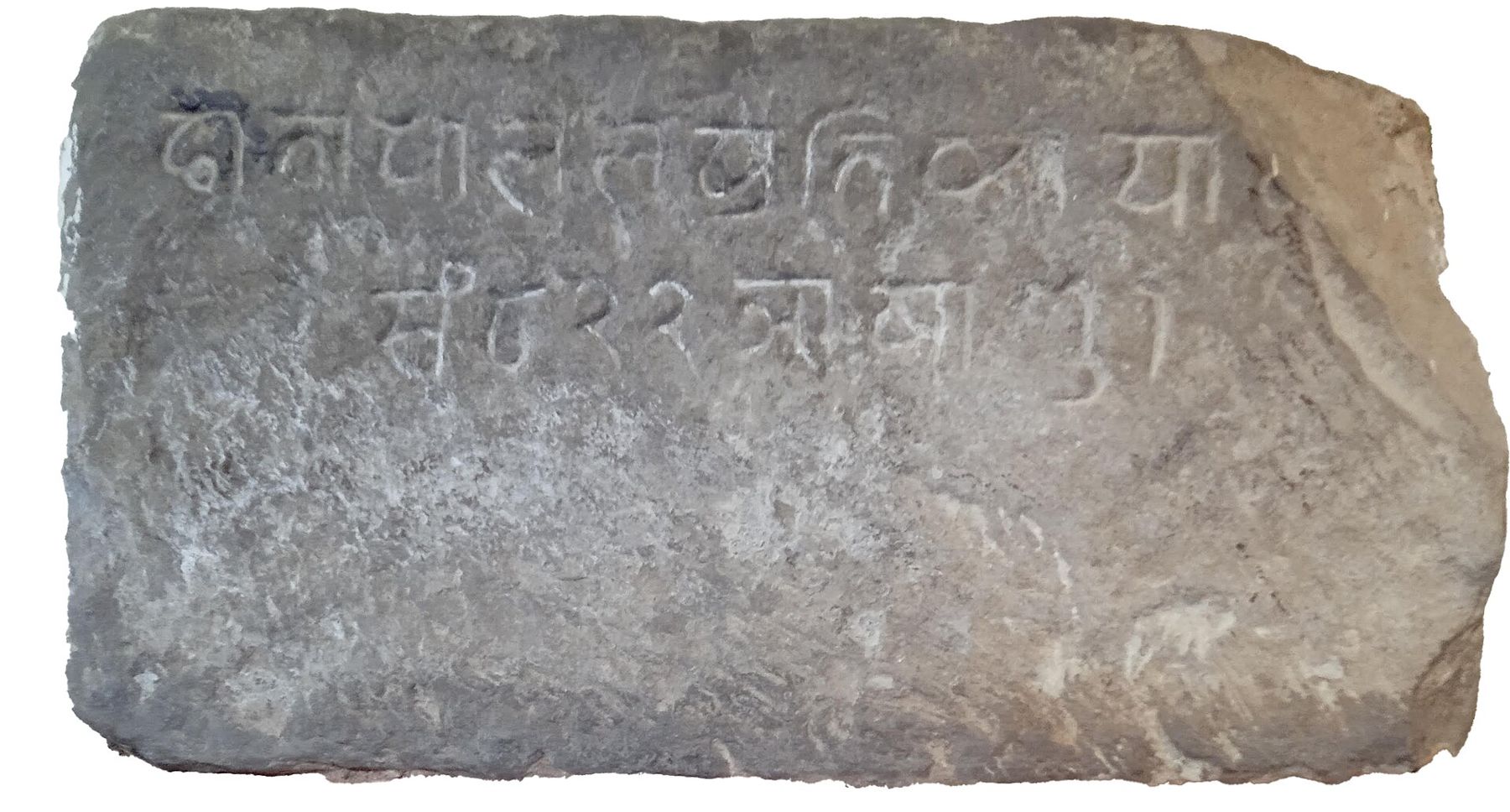
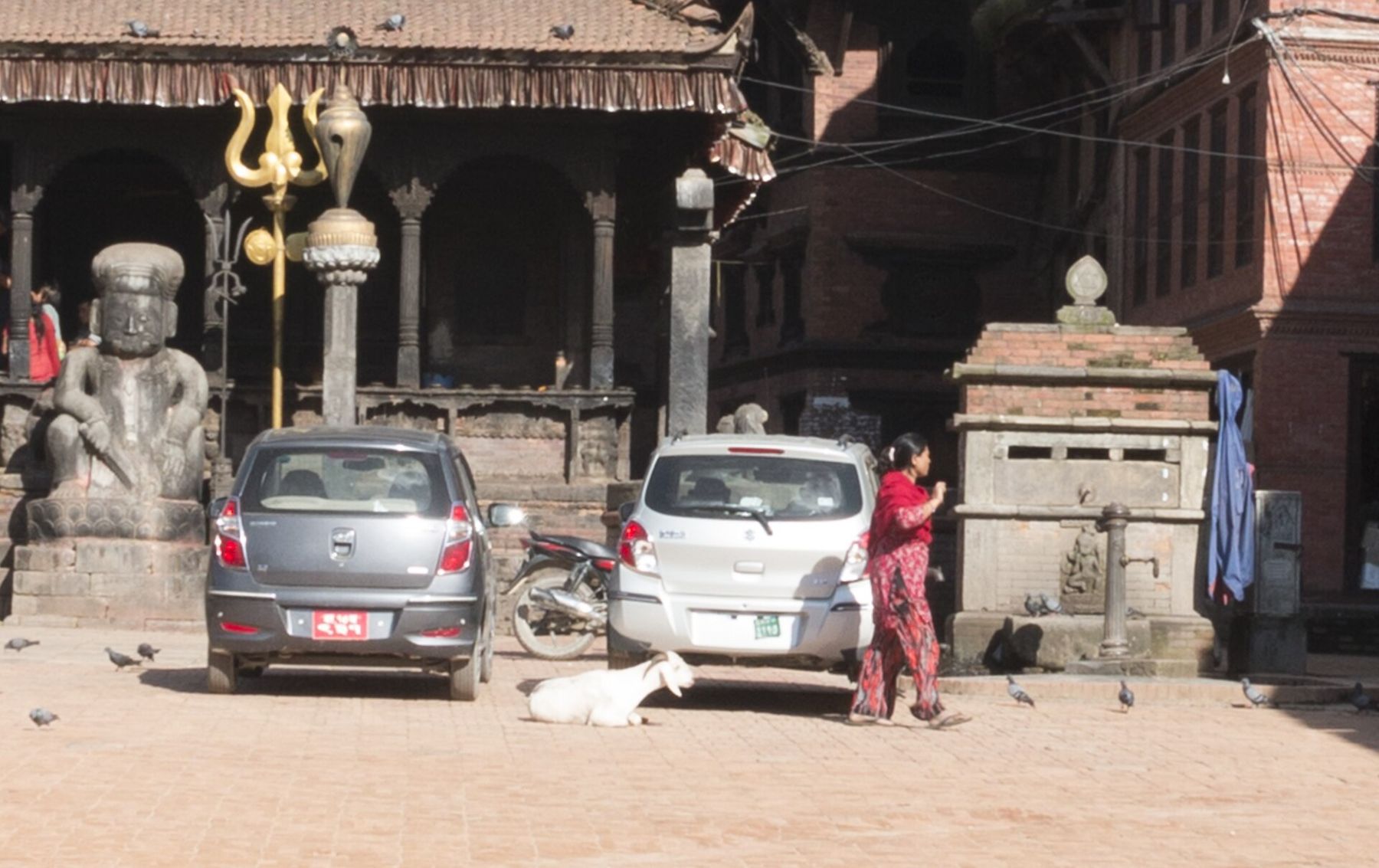
East of Taumadhi, along a lane lined with old houses, Dattatreya Square forms the heart of the old town. It is named after its temple to Dattatreya, a god who combines Brahma, Vishnu and Shiva, a tall wooden building that is among the oldest in Bhaktapur. Stone guardians stand at its stair, and a pillar topped by a figure faces the shrine. The square is ringed by former monastery buildings, the maths, where priests lived and studied.
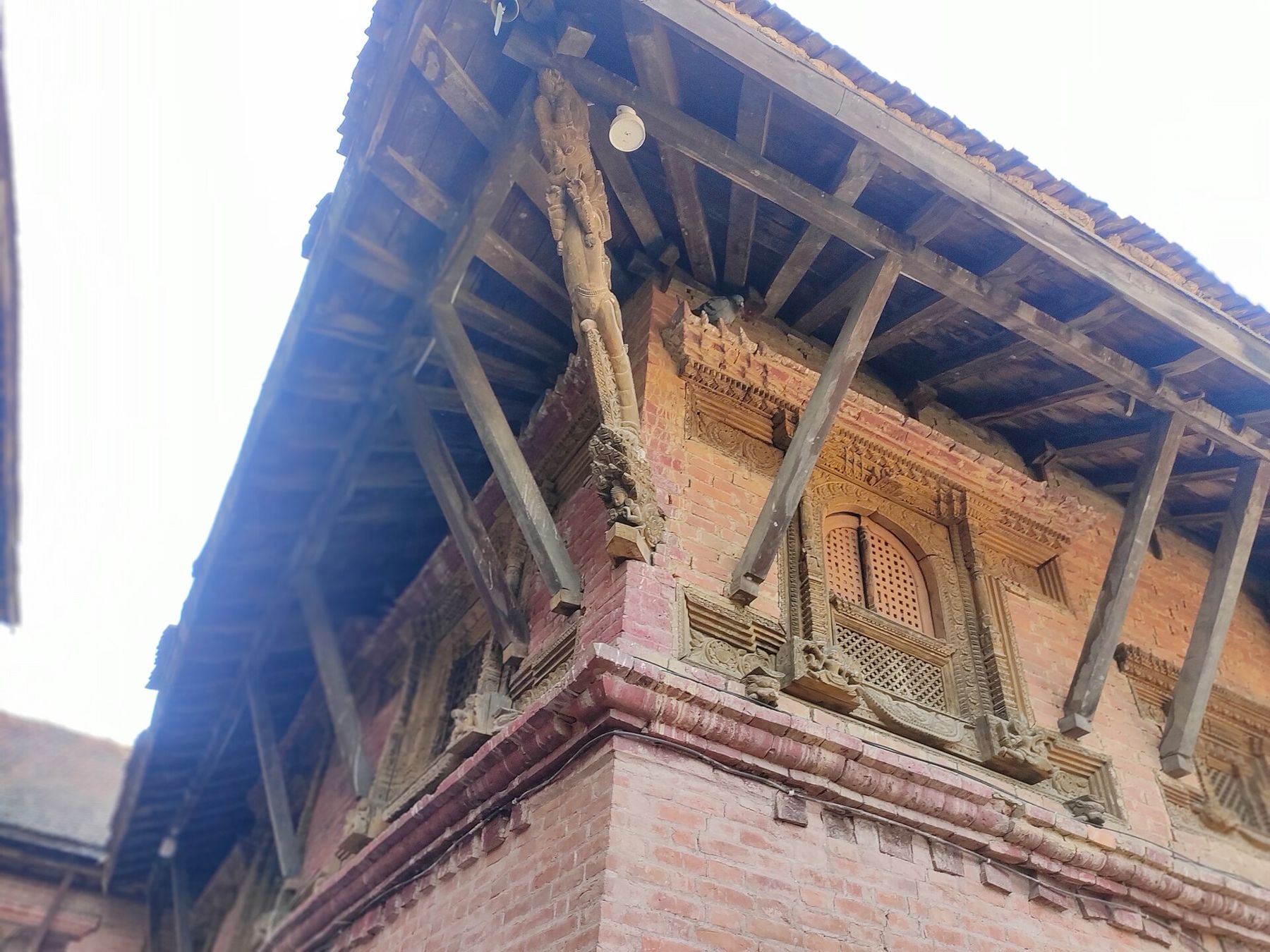
In a lane behind the Pujari Math is the Peacock Window, carved in the eighteenth century and still one of the most famous windows in the valley; the guide to Newar windows tells its story. Around the square, woodcarvers work in their shops, and you can see new pieces being cut in the same patterns as the old.
Around the square, woodcarvers work in their shops, and you can see new pieces being cut in the same patterns as the old.
Pottery Square and curd
South of Durbar Square, in the area known as Pottery Square, potters work in the open. The square is often covered with rows of drying pots, the wheels turning beside them, and kilns smoking under straw and ash. Watch quietly; if you want to photograph someone at work, ask first. You can buy small pieces, but remember that unglazed clay is fragile in a backpack.
Many of the pots are for daily use in the town: water jars, curd bowls, and small oil lamps lit by the hundred at festivals. The clay comes from the fields around Bhaktapur, and pottery here is a family trade passed down within households, with children helping to stack and turn the drying pieces. Later in the day, the potters move pots into the shade or cover them, depending on the weather.
Bhaktapur is also famous for juju dhau, "king of curd", a rich sweet yoghurt set in clay bowls. It is sold all over town and best eaten fresh. The guide to Newar food says more about it and about the town's feast dishes.
Staying past the day-trippers
Foreign visitors pay an entry fee to the town's heritage area, usually checked at the main entrances. Buses and taxis run from Kathmandu, and the journey takes longer at busy times of day. The town is best on foot: cars are restricted in much of the centre.
Stay one night if you can. In the evening, when the last buses have gone, families gather on temple steps, the smell of cooking drifts from doorways, and music groups practise in the squares. Early morning brings worshippers to the shrines and farmers to the fields beyond the town. The lanes between the squares, with their water spouts and small shrines, are where Bhaktapur feels most like itself.
 Next in the royal citiesKathmandu Durbar Square, Hanuman Dhoka and the old palace