Newar craft and custom · Kathmandu Valley
Newar food, from samay baji to yomari
Beaten rice, spiced buffalo, lentil cakes and sweet dumplings: the cooking of the Newar cities is bound to festival and ritual, and it rewards anyone willing to try a little of everything.
- Era
- Living tradition
- From Thamel
- Walk into the old city lanes
- Bring
- An appetite and a free right hand
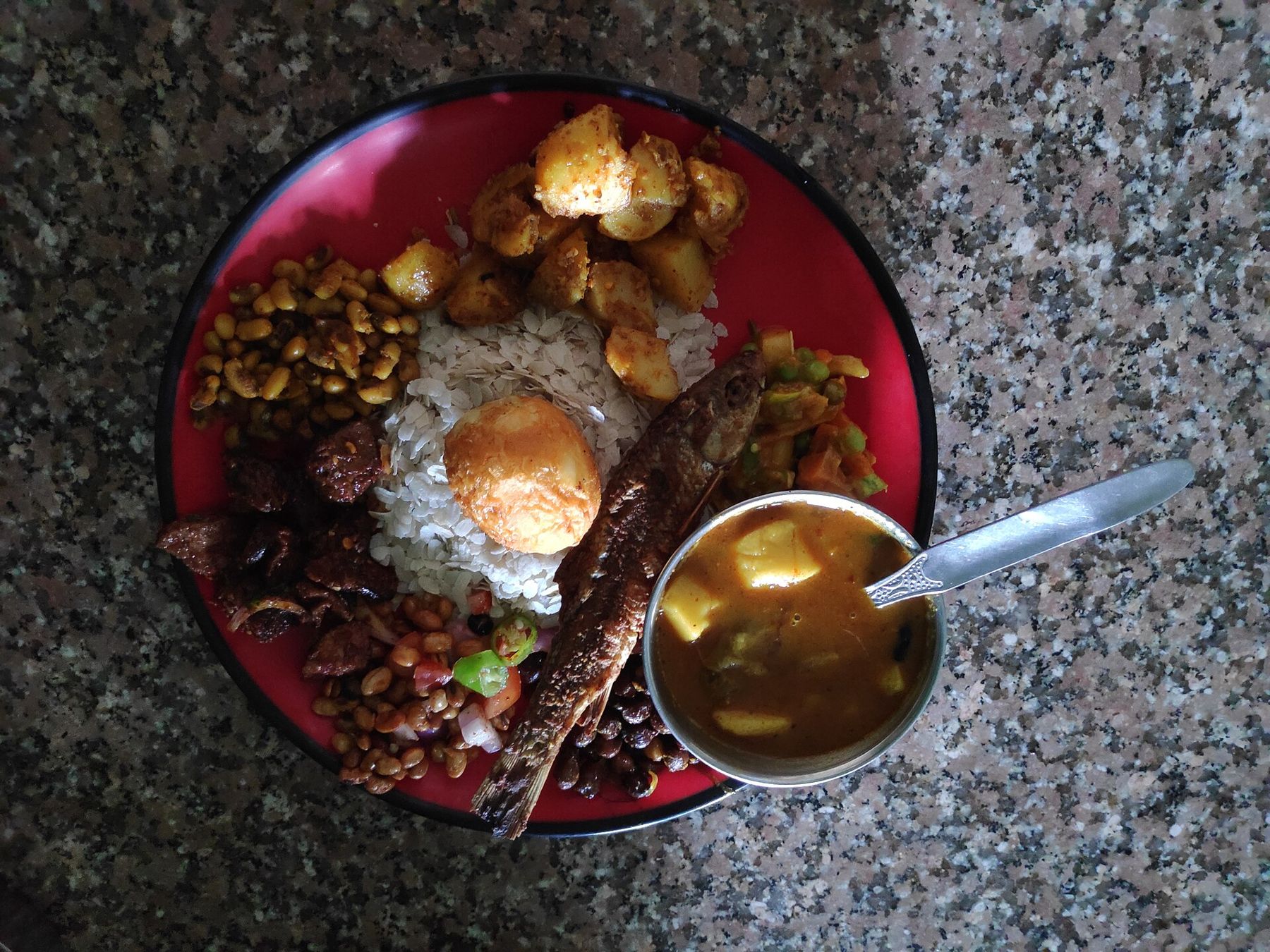
Newar food is the cooking of the old cities of the Kathmandu Valley, and it is quite different from the dal and rice that most visitors meet across Nepal. It is built around beaten rice, buffalo meat, lentils, soybeans, pickles and strong spices, and around a calendar of feasts that marks every stage of the year and of a person's life. Much of it is snack food, khaja, eaten in the afternoon or with drinks; some of it is cooked only once a year.
This guide describes the dishes worth knowing and how to eat them well. It names no places to eat: in Kathmandu, Patan and Bhaktapur, look for small eating houses in the old quarters where the food is cooked in front of you, and for the stalls that appear at festivals.
Samay baji, the ritual plate
Samay baji is the dish that best sums up Newar food. It is a set of items served together on a plate or leaf: beaten rice (baji), roasted black soybeans, spiced buffalo meat, a boiled or fried egg, a small fried fish, fresh ginger, and often a sour potato pickle, a lentil cake and leafy greens. Each item carries meaning, and the plate is offered to the gods at festivals and family rites before it is shared out among the people present.
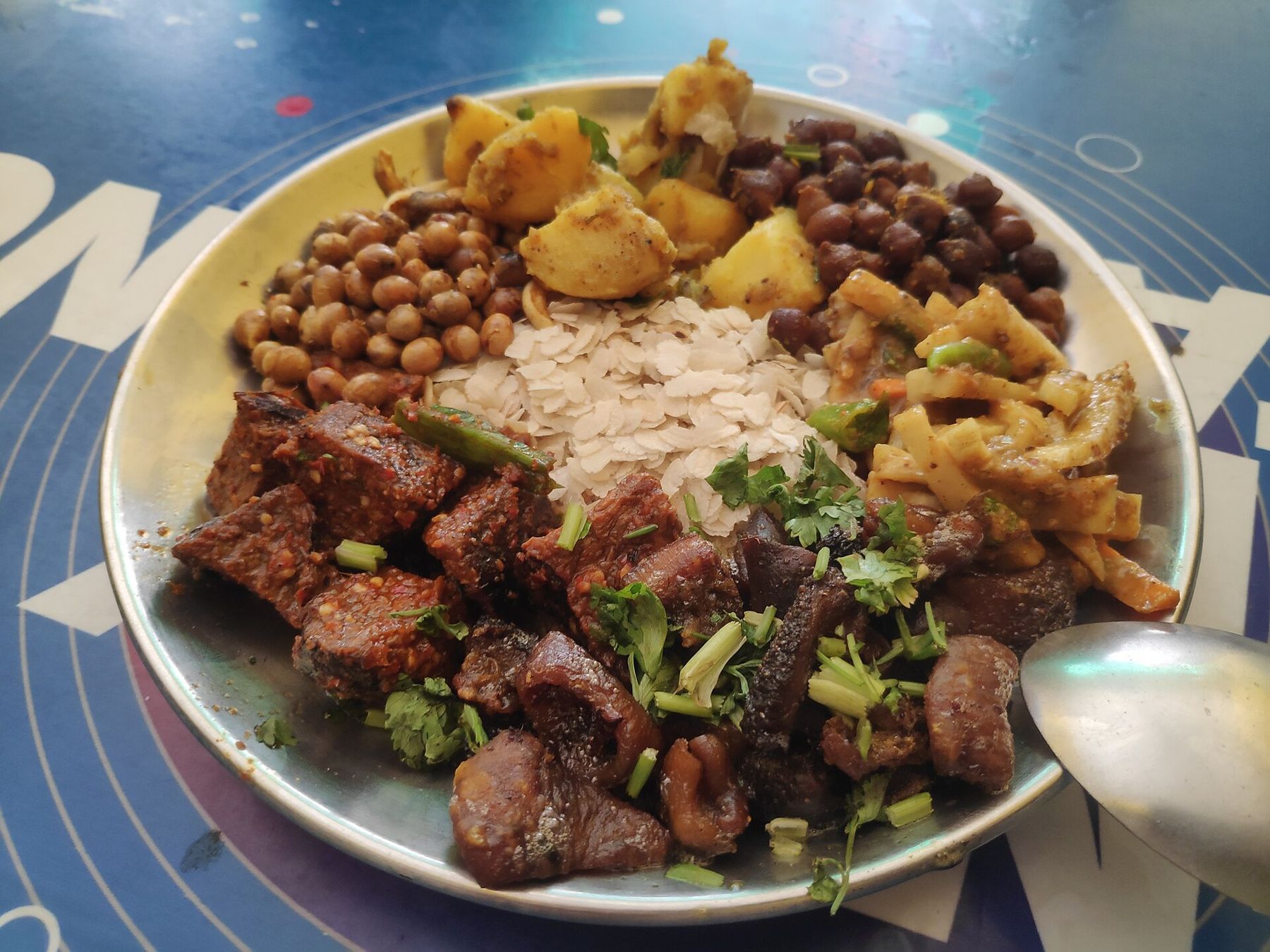
Served as an ordinary meal, the same ingredients become a khaja set: a generous plate of beaten rice surrounded by meat, beans, pickles and a bowl of something hot. Beaten rice is dry and light; you eat it with the wetter dishes, a pinch at a time.
The everyday dishes
Bara
Bara, called woh in Newar, is a round, flat cake made from ground black lentils and fried on a griddle. It can be eaten plain or topped with a fried egg or minced meat. It is filling, savoury and one of the easiest dishes to start with.
Chatamari
Chatamari is a thin crepe of rice flour cooked on a flat pan and topped with minced meat, egg or vegetables. It arrives as a whole round and is usually shared.
Choila
Choila is buffalo meat grilled over a flame, then cut small and mixed with mustard oil, chilli, garlic, ginger and spices. It is smoky and hot, and a regular part of a khaja set.
Achar and greens
Pickles, achar, go with almost everything. The potato pickle, sharp with sesame, lemon and chilli, is the classic; others are made with radish, cucumber or tomato. Sautéed greens and fermented vegetables add bitterness and sourness to the plate.
Also in the valleyBisket Jatra, Bhaktapur's new yearFood of the festivals
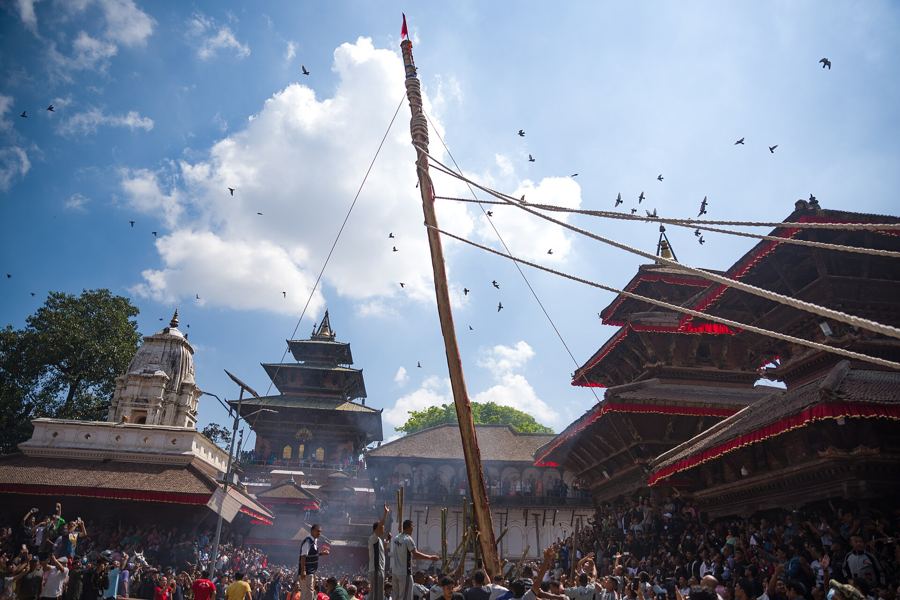
Many Newar dishes are tied to particular days. Kwati, a thick soup of several kinds of sprouted beans, is eaten at the August full moon, when sacred threads are renewed, and is thought to restore strength in the wet season. During Indra Jatra and the other autumn festivals, households and neighbourhood groups lay out samay baji for the gods and for anyone who comes; the guide to Indra Jatra describes the festival itself.
Yomari is the most loved festival sweet. It is a steamed dumpling of rice flour shaped into a point, like a fig or a fish, and filled with chaku, a dark molasses, mixed with sesame seeds, or sometimes with a sweet milk paste. It is made in quantity for Yomari Punhi, the full moon of early winter at the end of the rice harvest, when families also offer yomari to the gods of the granary. Outside that season you may find it in some eating houses, but it is at its best at home, on its day.
At Bisket Jatra and other town festivals, households cook for days, and relatives come from across the valley to eat together.
Juju dhau and other sweets
Bhaktapur is known for juju dhau, "king of curd", a thick, sweet yoghurt set in unglazed clay pots that let it breathe and firm up. A spoonful at the end of a heavy meal settles everything. The town's curd features in the guide to Bhaktapur, and it is sold widely there.
Other sweets include lakhamari, a large, crisp ring of fried dough given at weddings and festivals, and the many sweets of milk and sugar shared with neighbours in the autumn festival season.
Feasts and drinks
A Newar feast, bhoj, follows a set order. Guests sit in rows on mats on the floor, and helpers move along the rows serving each dish in turn onto leaf plates, from beaten rice and meat at the start through vegetables and pickles to curd and sweets at the end. The eldest are served first and often sit at the head of the row. Refusing a dish is fine; the polite way is a small gesture over the plate before it is served, rather than leaving food untouched.
Two traditional drinks go with feasts and with khaja. Aila is a clear spirit distilled from grain, poured from a height in a thin stream from a narrow-spouted jug. Thwon is a cloudy, mild rice beer. Both are strong in their own way, and both are part of ritual as well as pleasure; drink in moderation, and accept that a host will keep refilling until you cover your cup.
Eating with respect
Newar food is eaten with the right hand, which is used for food and giving; the left is considered unclean for these purposes. Spoons are usually available if you ask. Food that has touched someone's mouth or plate is regarded as polluted for others, so do not offer anyone a taste from your own plate, and do not drink from a shared bottle by touching it to your lips.
Buffalo meat is central to Newar cooking, and beef is not eaten by Hindus. Vegetarians can still eat well: beaten rice, bara, chatamari, beans, pickles, greens, yomari and curd make a full meal. In a small eating house, say plainly what you do not eat, and you will usually be steered to what suits you.
If you are invited to a family meal or a feast, accept what you can, eat slowly, and say thank you at the end. It is the surest way into the life of the old cities.
 Next in newar craft and customIndra Jatra, the festival of the living goddess