The road from Gorkha · Nuwakot
Nuwakot, the seven-storey palace above the Trishuli
A brick tower on a ridge above the Trishuli valley marks the first great prize of the Gorkha campaign, the fort that guarded the road from Kathmandu to Tibet.
- Era
- Shah
- From Thamel
- Bus or car north-west, a few hours
- Bring
- Water, warm layer, good shoes
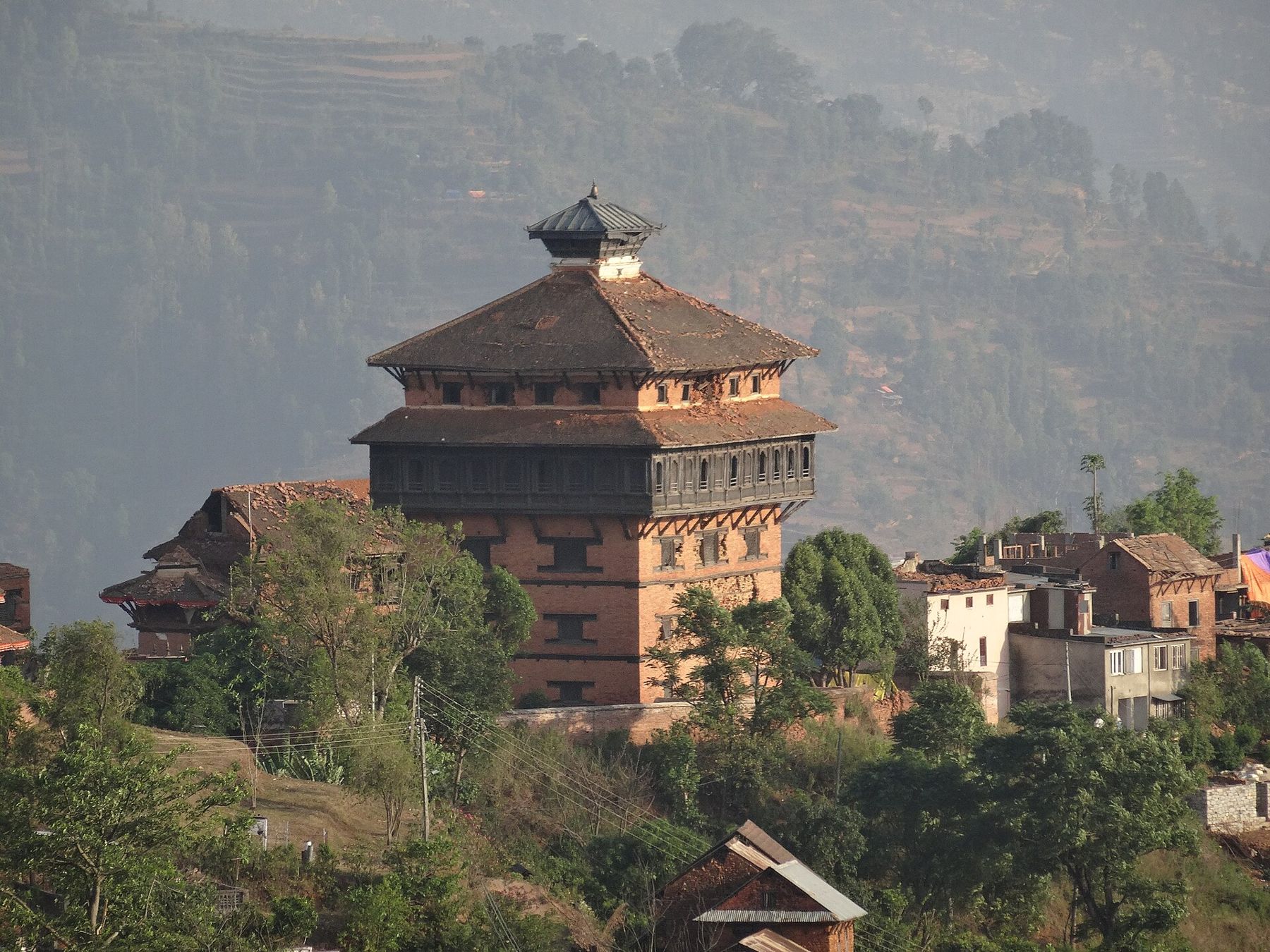
Nuwakot stands on a ridge north-west of the Kathmandu Valley, above the deep valley of the Trishuli River. In the eighteenth century it was a fort on the trade route between the valley and Tibet, and whoever held it could tax and control that route. That made it the first great target of Prithvi Narayan Shah of Gorkha, and its capture in 1744 marked the real beginning of his campaign to take the valley.
Today Nuwakot is a quiet village of brick houses, terraced fields and old temples, with its seven-storey palace tower rising above everything. Few visitors come, which is part of its appeal.
The capture of 1744
Prithvi Narayan Shah became king of Gorkha in 1743. Nuwakot was then held by the kingdom of Kathmandu, and a first attempt to take it failed. In 1744 the Gorkhali army attacked again and took the fort. From Nuwakot the young king could watch the valley, block the trade route to Tibet, and prepare the long campaign that followed. The fall of Kirtipur in 1767 and of the three royal cities in 1768 and 1769 all grew from this first foothold.
The capture showed the patience that marked the whole campaign. Rather than strike at the valley directly, the king first secured the hills and routes around it, so that the valley cities would be starved of trade and isolated from allies. Nuwakot was the first link in that chain.
Nuwakot remained important to the king for the rest of his life. He died nearby in 1775, at Devighat, where the Trishuli meets the Tadi river, a holy confluence below the ridge.
The seven-storey palace
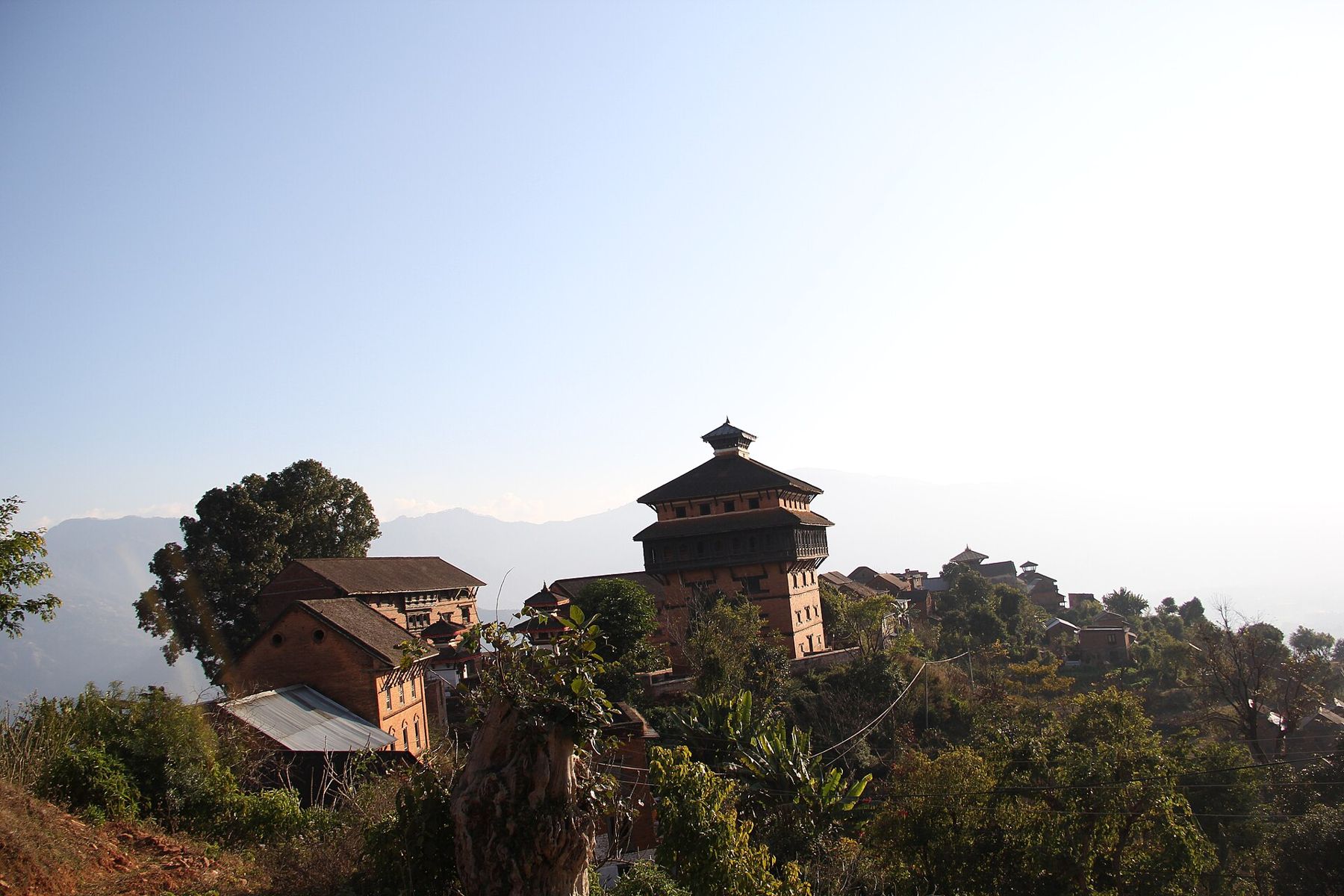
The palace, known as the Saat Tale Durbar or seven-storey palace, was built after the conquest and became a residence for the Shah kings when they came to Nuwakot. It is a tall brick tower in the Newar style, with carved wooden windows and a balcony running around the top floor under a wide roof. Around it stood other palace buildings, courtyards and walls, some of which survive in part.
The tower is a striking sight from the ridge and from the valley below. Its builders brought the style of the valley cities into the hills, much as the kings of Gorkha had done at their own palace. Inside, rooms and stairs climb to the upper storeys; how much of the building you can enter depends on the state of repairs.
Also in the valleyGorkha Durbar, where the campaign beganThe Bhairavi temple
Near the palace stands the Bhairavi temple, the most important shrine in Nuwakot, dedicated to a fierce form of the goddess. It is an active temple, and a festival in spring draws people from across the district. Animal sacrifices are part of the worship here, as at many temples of the goddess, so be prepared and keep a respectful distance.
Other smaller temples and shrines stand around the ridge, some old, some newer. Walk slowly and look at the carving on struts and doors; the craftsmanship came from the same traditions as in the valley.
The temples, like the palace, are a reminder that the hill kingdoms looked to the Newar cities for their art and their builders. Gorkhali kings employed Newar craftsmen, and Newar traders settled in hill towns along the routes, bringing their festivals and their gods with them. In Nuwakot you can feel that mixing of hill and valley cultures in the buildings around you.
The Trishuli valley
Below the ridge, the Trishuli River runs in a broad valley of terraced fields, villages and forest. From the palace you can look down on the town of Trishuli Bazaar, also called Bidur, and on clear days north towards the mountains of the Langtang range.
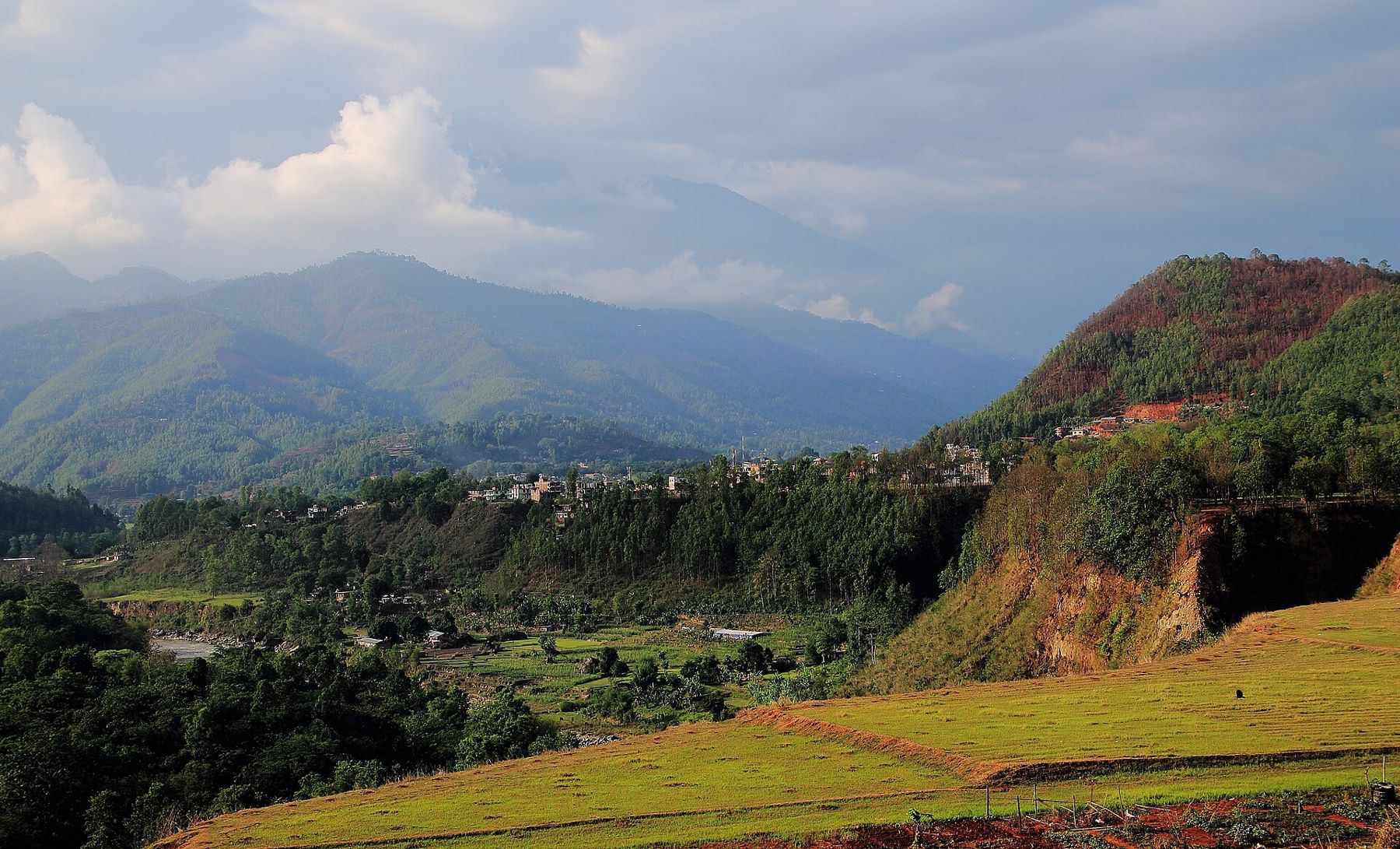
The valley was the main route north to Tibet long before the Gorkha conquest, and traders, pilgrims and soldiers all passed this way. It is easy to understand from the ridge why Nuwakot was so valuable: whoever held it held the gate. A walk down the hillside through the fields helps you see the fort as its attackers saw it.
Earthquake damage and repairs
The 2015 earthquake damaged Nuwakot badly. The palace tower was badly cracked, and other palace buildings and temples were damaged. Repair work began after the earthquake and has continued for years, using traditional methods where possible. You may find parts of the site closed or under scaffolding.
The village too has rebuilt. Many houses are new, and some old ones stand propped and waiting. Visiting supports the local economy and shows that people still come to see the place.
Visiting Nuwakot
Nuwakot is reached by road from Kathmandu, heading north-west through the hills to Trishuli Bazaar and then climbing to the ridge. The journey takes a few hours. A visit fits well with a trip to Gorkha Durbar, following the first stages of the unification in order. There may be an entry fee for the palace area.
Stay overnight if you can. Mornings on the ridge are often clear, with the tower lit by the first sun and the valley below still in mist. Evenings are quiet, with the sound of the river far below and the bells of the Bhairavi temple.
Bring a warm layer even outside winter, since the ridge can be cool and windy after dark, and carry water for the walks around the hillside. Most of all, bring time: the point of Nuwakot is to sit on the ridge and look at the land the way a king of Gorkha once did, weighing the road to the valley below.
 Next on the roadKalu Pande and the kajis of Gorkha