Shrines on the valley rim · Kathmandu
Pashupatinath and the Bagmati ghats
Nepal's holiest Hindu temple stands on the banks of the Bagmati, where the dead are cremated in the open. The inner temple is closed to non-Hindus, but the river terraces teach a great deal.
- Era
- Many eras
- From Thamel
- A taxi east towards the airport
- Bring
- Modest clothes, a quiet manner, the camera mostly away
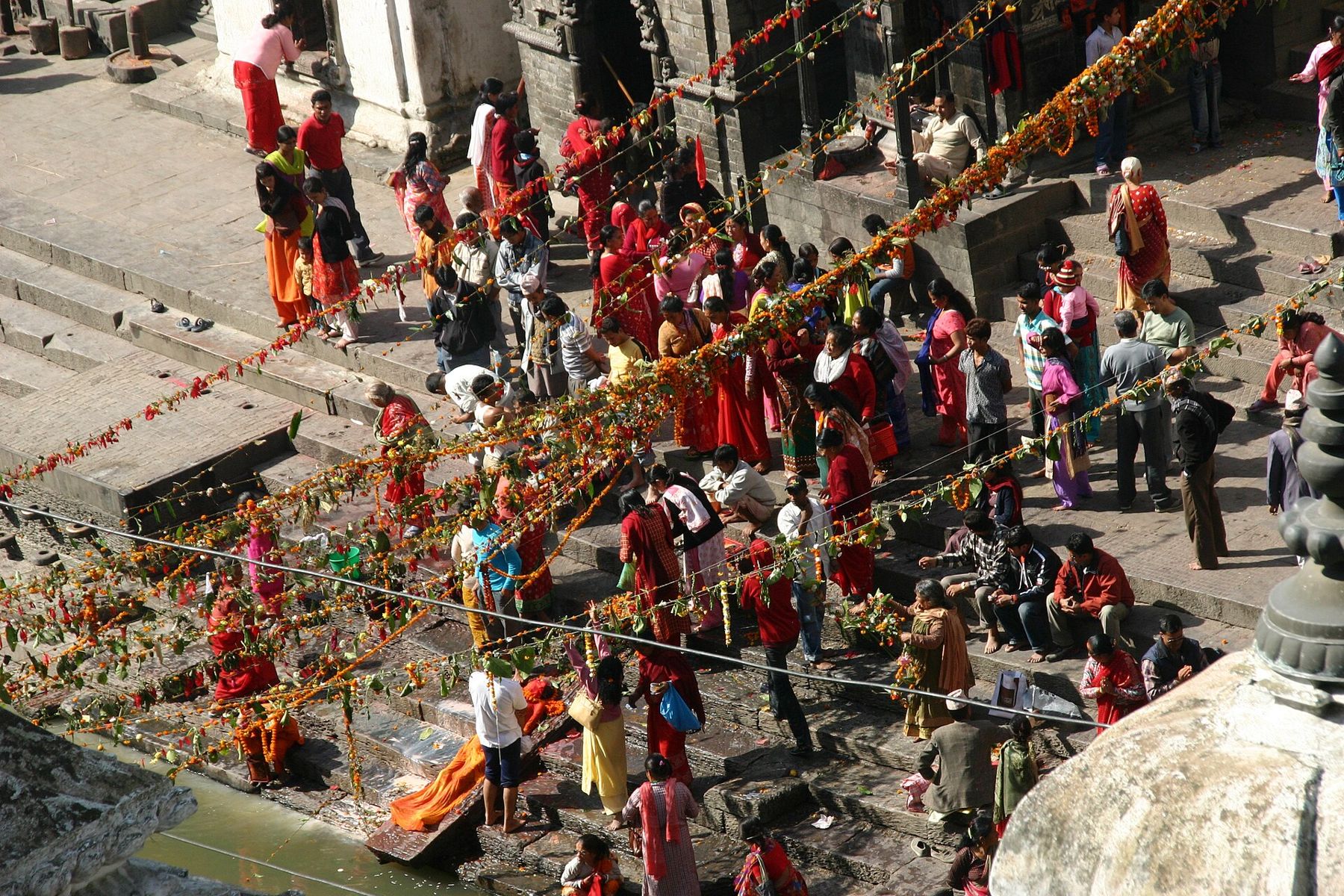
Pashupatinath is the most sacred Hindu temple in Nepal and one of the great Shiva shrines of the Indian subcontinent. It stands on the west bank of the Bagmati river, east of the old city of Kathmandu, in a cluster of temples, shrines, ghats and pilgrim houses that spreads up the slopes on both sides of the water. Pilgrims come from across Nepal and India to worship here, and many Hindus hope to be cremated on its banks.
For visitors who are not Hindu, a visit here means watching rather than entering, and it calls for more care than almost anywhere else in the valley. Done well, it is one of the most moving places you can see.
Shiva as lord of the animals
Pashupati means "lord of the animals", one of the many forms of Shiva. Here he is worshipped in the form of a linga, the abstract stone emblem of the god, in the main temple. The temple is a broad two-roofed pagoda with gilded roofs, set in a courtyard with a great gilded image of Nandi, Shiva's bull, facing its western door.
The temple's origins are very old and its legends older still. The present building dates from a rebuilding in the late Malla period, and the site has been a place of worship for far longer. The main priests have traditionally come from South India, a custom that ties the temple to the wider Hindu world.
Hindus only inside
Entry to the main temple courtyard is restricted to Hindus. Signs at the gates make this clear, and guards check. Non-Hindu visitors should not try to enter, and should not photograph into the gateway if asked not to. The rule is long-standing and is part of the temple's sanctity, not a slight on visitors.
The same applies at some other shrines in the complex, including the temple of Guhyeshwari upstream, an important seat of the goddess. Follow signs and the guidance of people at the gates.
From the east bank of the Bagmati you can see a great deal: the river, the ghats, the roofs of the main temple, and the steady flow of worshippers.
Also in the valleyBoudhanath and the evening koraThe ghats and cremations
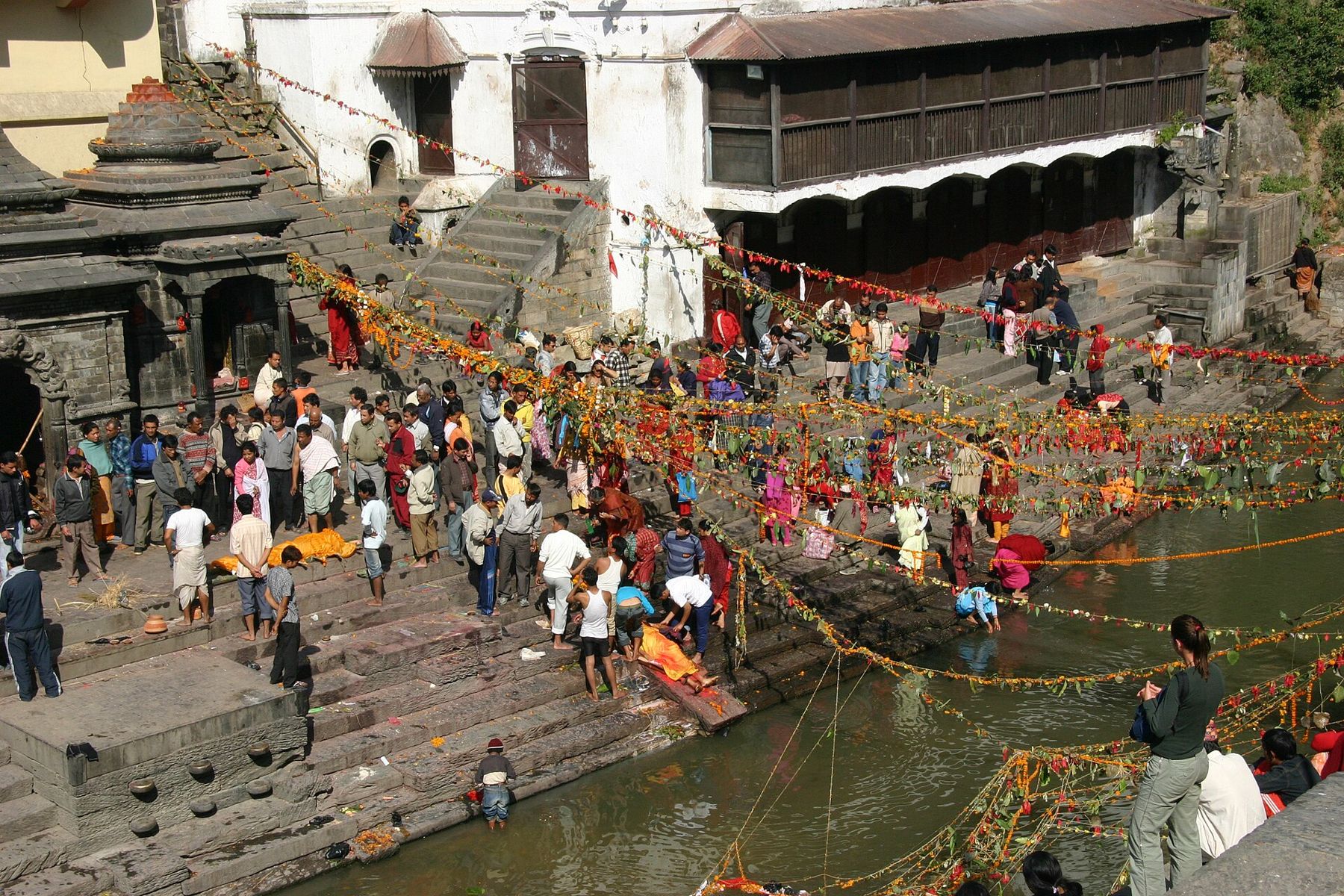
The stone steps leading down to the river are the ghats. On the platforms beside the water, especially at Arya Ghat just below the main temple, the bodies of the dead are washed in the river and cremated on open pyres, usually within a day of death. The Bagmati is held sacred, and being cremated here is believed to bring merit.
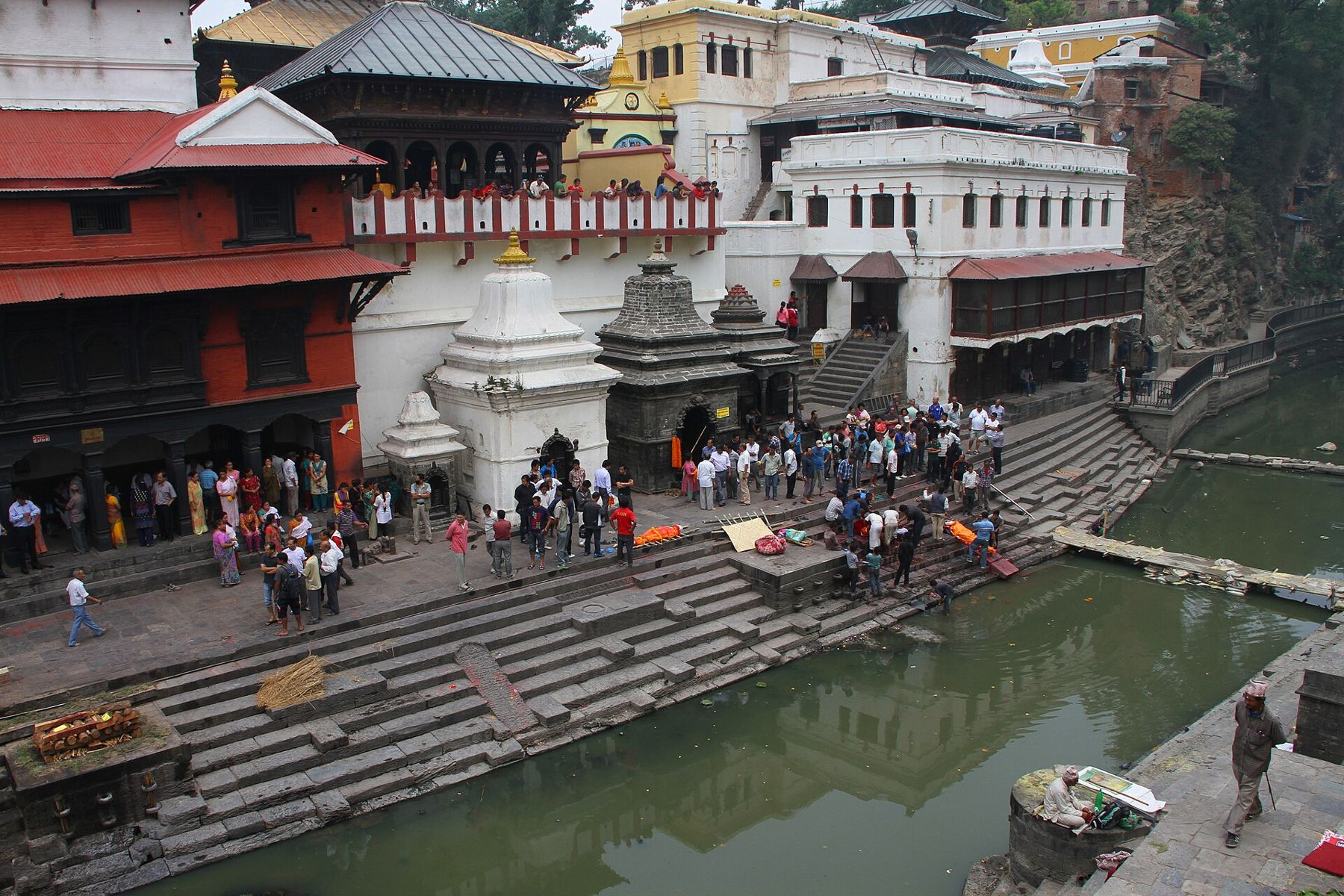
Watching a cremation is permitted from the east bank, where terraces and steps give a view across the water, and many visitors do. Remember what you are watching: a family saying goodbye to someone they love, often with grief and in the middle of hard ritual work. Stay on the far bank, keep a respectful distance, keep quiet, and do not photograph mourners. If you photograph at all, do it from a distance and without lingering. Many visitors choose not to.
The east bank and the shrines
On the east bank, a terrace lined with small stone shrines, each holding a linga, climbs above the river. Behind them, paths lead up through trees to the forested hill known as Mrigasthali and on towards Guhyeshwari. Monkeys roam the woods and temple roofs.
Further downstream, the river passes more ghats and temples before it winds on towards Patan and the gorge at the valley's southern edge. The Bagmati suffers from pollution as the city has grown, and efforts to clean it have come and gone; even so, it remains sacred, and pilgrims still bathe and make offerings in it.
The complex is full of smaller temples and old images in stone, some centuries old. Wandering the paths away from the ghats, you find pilgrim rest houses, homes for the elderly who come to spend their last days near the god, and quiet corners with views over the river.
Sadhus and festivals
Pashupatinath draws sadhus, Hindu ascetics who have renounced ordinary life, and you will see some on the terraces in saffron or ash, with long matted hair. Some are serious renunciants; some pose for photographs in return for money. Either way, ask before photographing anyone, and accept a refusal.
The biggest festival is Maha Shivaratri, the great night of Shiva, in late winter, when huge crowds of pilgrims and many sadhus gather, fires burn through the night and the temple stays busy until dawn. During Teej, in late summer, women dressed in red come in large numbers to worship and pray. On these days the area is extremely crowded, and many visitors prefer to come on an ordinary day.
The complex also figures in the valley's wider ritual year; the guide to Indra Jatra describes another of the great festivals, in Kathmandu itself.
Visiting well
Foreign visitors pay an entry fee to the complex. Dress modestly, covering shoulders and knees. Leather is best left behind if you plan to approach any shrine.
Keep to the paths, give way to processions and funeral parties, and do not step on or over offerings. Speak quietly. Unofficial guides may offer to explain the ghats; decide for yourself whether you want company, and be clear about it.
Pashupatinath sits close to Boudhanath, and the two make a natural pair for one day, Hindu and Buddhist shrines a short ride apart. For how to plan your days around the valley, see the guide to getting around the valley.
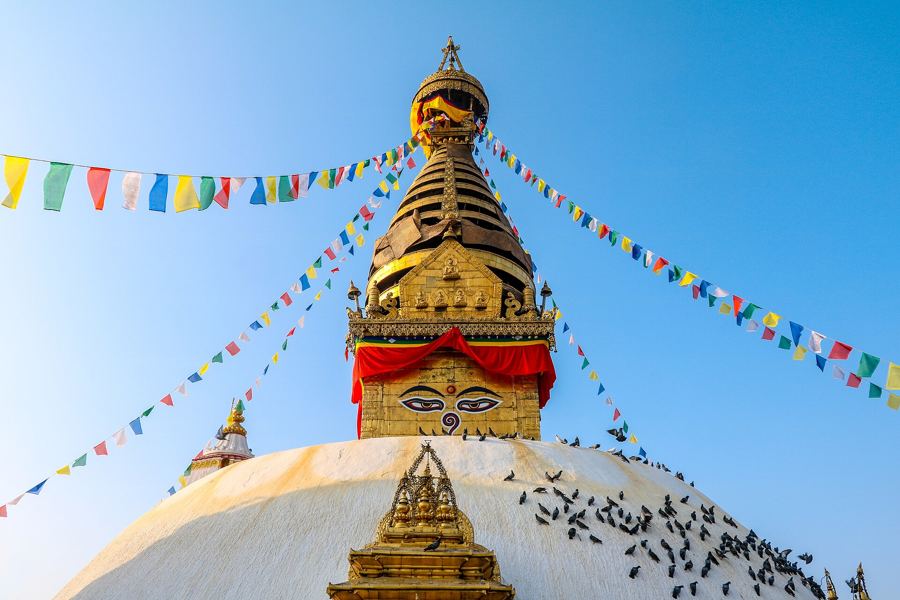 Next in shrines on the valley rimSwayambhunath, the hill of the self-arisen stupa