The royal cities · Kathmandu
Maru and the rebuilt Kasthamandap
The wooden pavilion that gave Kathmandu its name fell in 2015 and has been raised again on the same platform. Around it, Maru keeps the habits of an old crossroads square.
- Era
- Malla
- From Thamel
- Walk south past Durbar Square, then west
- Bring
- Coins for offerings, a scarf, time
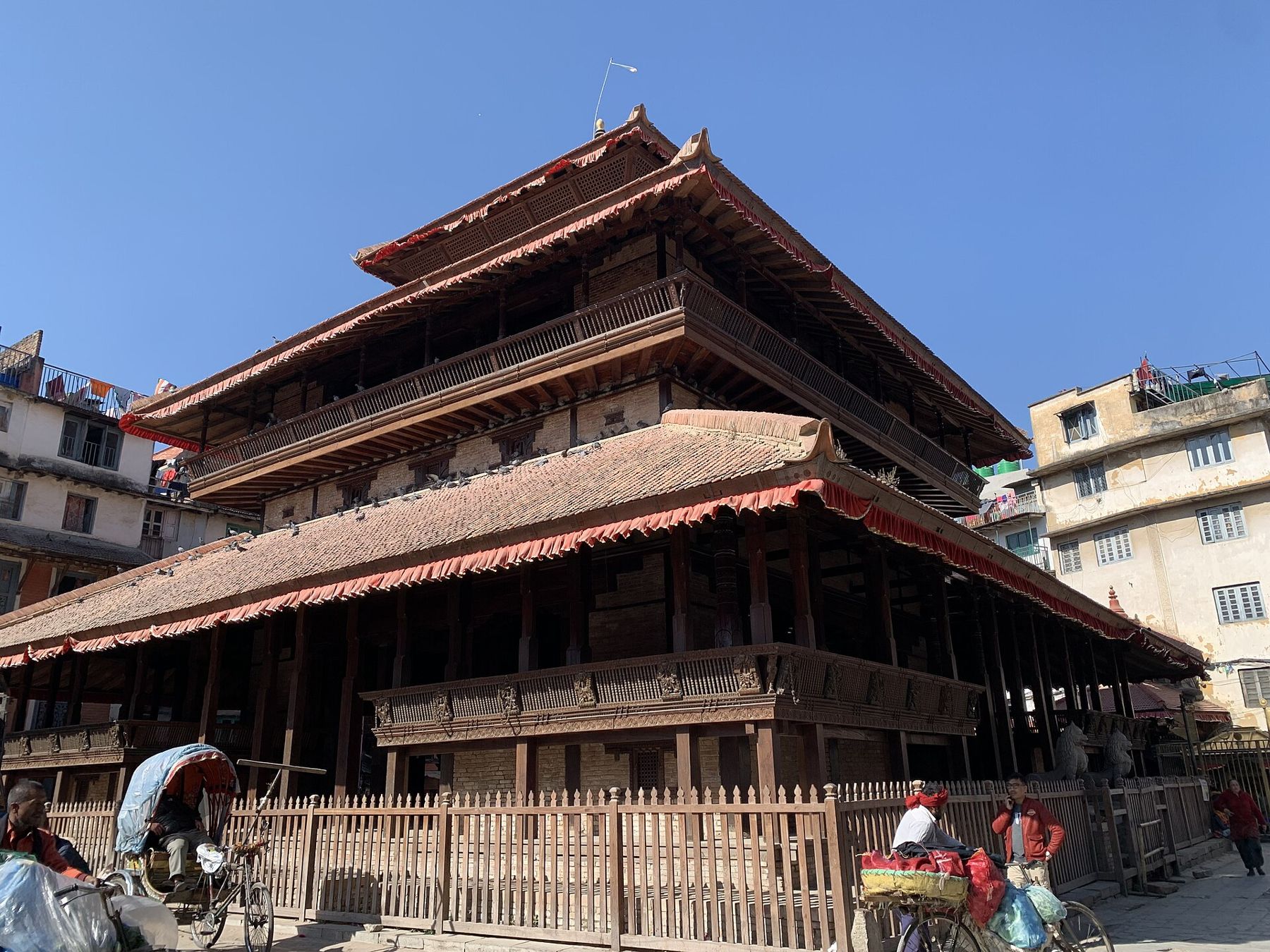
Maru is the old square at the southwestern corner of Kathmandu Durbar Square, where the royal city meets the trading lanes heading west. It is a small place, easy to cross in a minute, and easy to miss if you are steering towards the palace. Yet it holds the building that gave the city its name, and a shrine that many people in Kathmandu visit before any important journey.
The pavilion of wood
Kasthamandap means, roughly, "wooden pavilion". Tradition holds that it was built from the timber of a single great tree, and that the city that grew up around it took its name: Kathmandu is the Kasthamandap's city. The building was a public rest house, a sattal, open on the ground floor so that travellers, traders and pilgrims could shelter, sleep and meet. Its date is uncertain, but it was among the oldest standing buildings in the valley, mentioned in documents from the medieval period.
At its centre sat an image of Gorakhnath, the yogi saint, and the space around him served as a meeting floor for the neighbourhood. Musicians gathered there, and people waited out the monsoon rain under its eaves. It was less a temple than a covered square, and that public character is what people missed most when it was gone.
The fall in 2015
On 25 April 2015 the Kasthamandap collapsed in the earthquake, and people sheltering inside lost their lives. The images of the platform heaped with broken timber became one of the defining pictures of the disaster for the city. The loss was felt not only as damage to heritage but as the end of a place where ordinary life happened.
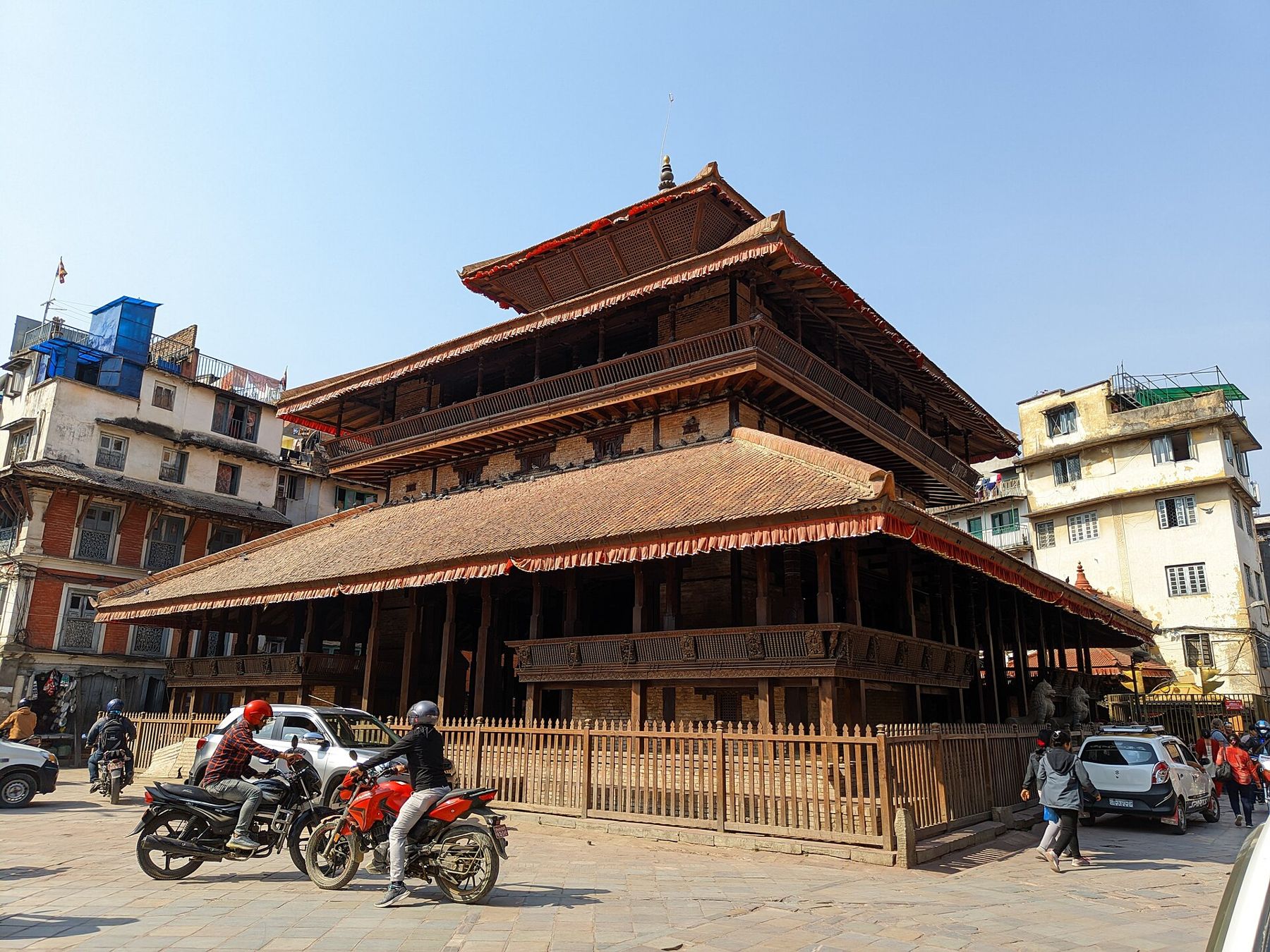
What to do next became a long argument. Some favoured quick reconstruction with modern materials; others insisted that the pavilion be raised in the old way, with traditional timber joinery and brick, and that its rebuilding be guided by the community around it rather than handed out to contractors. Archaeologists studied the foundations when the rubble was cleared, and the excavations added to what was known of its age. In the end the work went ahead in traditional style, and by 2023 the Kasthamandap stood again on its platform, its roofs and galleries in fresh wood.
Also in the valleyKathmandu Durbar Square, Hanuman Dhoka and the old palaceMaru Ganesh
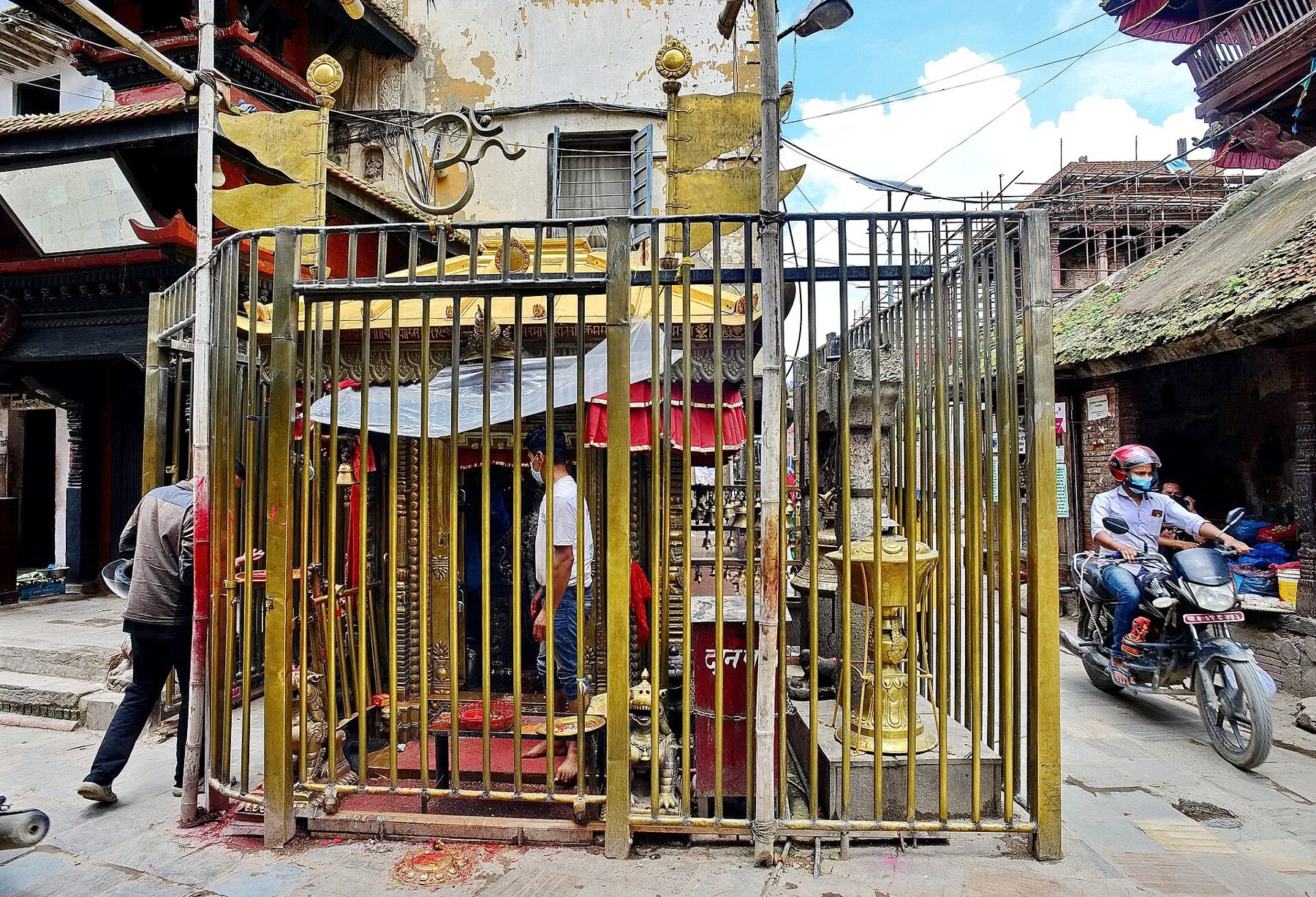
A few steps away, wedged between buildings, is the shrine of Maru Ganesh, also called Ashok Binayak. It is small, with a gilded roof, and now protected by brass railings, but it is one of the most visited Ganesh shrines in Kathmandu. Ganesh removes obstacles, so people stop here on their way to exams, weddings, business deals and long journeys. Bells are rung, red powder stains the paving, and offerings of flowers and sweets pile up in front of the image.
You may watch quietly from the side. Walk around the shrine clockwise if you join the flow, and do not step over offerings left on the ground. Early morning is the busiest and most interesting time, when people on their way to work make a quick stop, touch the image and move on.
Around the square
Maru has other old buildings around its edges: rest houses and small temples, some damaged in 2015 and rebuilt, some still in repair. The square has long been a place for selling garlands and offerings, and stalls appear and disappear with the day. From here the lanes lead west and south into dense neighbourhoods of brick houses, courtyards and small shrines, where few visitors go.
Following those lanes is a way to feel the old city as a working place rather than a monument. You pass doorways that open into courtyards, water spouts sunk below street level, and corners where a stone image of a god is worn smooth by hands. If you want to understand these spaces, the guide to bahals and courtyards explains how they work and how to enter one politely.
Reading the rebuilt pavilion
Some visitors are disappointed by new timber, expecting the darkness of old wood. It helps to remember that Newar buildings have always been repaired, re-roofed and partly rebuilt over the centuries; the continuity lies in the form, the joinery and the use, not in every beam. The rebuilt Kasthamandap repeats the old plan: a broad lower roof on a deep platform, open sides, a gallery above. Over time the wood will darken and the building will settle back into the square.
Look at how the posts rise from the platform, how the struts carry the eaves, and how open the ground floor is to the street. That openness is the point. A sattal welcomes anyone, and the hope of those who rebuilt it was that the neighbourhood would take it back as its own.
Small practicalities
Maru lies inside the heritage zone of Kathmandu Durbar Square, which charges foreign visitors an entry fee; keep your ticket with you. The square is busiest in the mornings and around festivals. During Indra Jatra in late September, crowds spill through Maru as the chariots move through the old city. Visit the pavilion and the Ganesh shrine together, then walk on into Durbar Square, so the small square and the great one sit side by side in your memory.